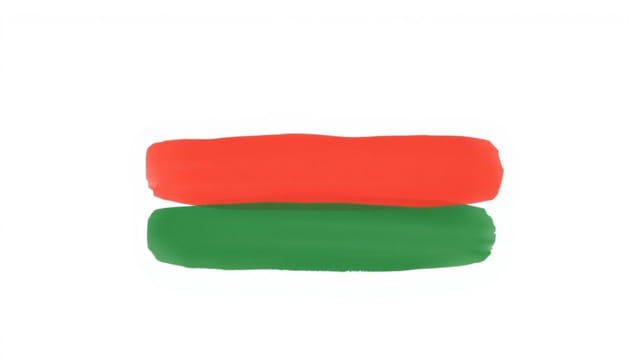
Among the many remarkable works in the realm of abstract expressionism, Violet, Green and Red by Mark Rothko holds a unique place for its emotional depth, masterful use of color fields, and minimalist composition that challenges the viewer’s perception. Created in 1951, this piece reflects Rothko’s philosophy of evoking raw, emotional experiences through visual simplicity. As with many of his paintings, the appeal of Violet, Green and Red lies not in complexity but in the way it compels introspection and emotional resonance. Exploring this painting in detail allows us to better understand Rothko’s technique, intent, and its place within the larger context of 20th-century art history.
Understanding Mark Rothko’s Artistic Philosophy
Mark Rothko, born in 1903 in what is now Latvia, emerged as one of the most influential figures in the abstract expressionist movement. Unlike some of his contemporaries who leaned toward dynamic brushstrokes and figurative abstraction, Rothko sought to strip away the distractions and connect directly with the emotional core of the viewer. He believed that art should invoke a sense of the sublime something that transcends language and touches the soul.
Rothko’s paintings are known for their large scale, blurred edges, and the use of vibrant yet meditative color palettes. His mature works, such as Violet, Green and Red, abandoned figurative elements entirely in favor of bold blocks of color, laid out in carefully constructed layers to produce a subtle yet profound impact.
The Composition of Violet, Green and Red
Violet, Green and Red is an oil painting on canvas, measuring 205.8 x 141 cm. As its name suggests, the painting is composed of three dominant colors. At the top lies a deep violet block, mysterious and cool, followed by a central green section that carries a muted calm, and finally a red base that anchors the composition with warmth and gravity. The edges of each color field are not sharply defined but appear feathered, almost glowing into one another, creating a visual tension between boundary and blend.
This composition is deceptively simple. The spatial arrangement invites viewers to explore relationships between color, contrast, and balance. Rothko’s genius lies in the orchestration of hues in such a way that they become emotionally charged. The painting does not tell a story in a traditional sense, but it speaks volumes through its silence.
The Emotional Language of Color
One of Rothko’s main goals was to use color as a primary vehicle of emotion. Violet, Green and Red demonstrates this with remarkable clarity. Each color serves a psychological function:
- Violet– Often associated with mystery and introspection, the violet top layer invites a contemplative mood. It can be interpreted as spiritual or melancholic, depending on the viewer’s mindset.
- Green– Typically symbolizing balance, nature, and calm, the central green panel offers a middle ground. It acts as a bridge between the emotional extremes of the other colors.
- Red– The red at the bottom conveys passion, energy, and urgency. It grounds the piece and can be seen as the emotional heartbeat of the painting.
Rothko’s careful juxtaposition of these colors doesn’t only appeal visually but also affects viewers psychologically. He intended for his works to be experienced in a state of quiet reflection, with the viewer standing close enough to be enveloped by the canvas.
Context Within Rothko’s Oeuvre
Violet, Green and Red was painted during a period when Rothko had fully developed his signature style of rectangular color fields. This was the early 1950s, a time of intense productivity and philosophical exploration for the artist. Rothko had recently turned away from mythological and surrealist imagery, convinced that abstraction offered a more direct path to the universal human experience.
This painting is part of a broader series in which Rothko explored color relationships and the meditative qualities of simplified forms. Many of his works from this era followed similar structures, yet each one managed to communicate a distinct emotional tone through variation in hue, scale, and proportion.
Critical Reception and Legacy
Critics and art historians have long praised Violet, Green and Red for its purity and power. The painting is a quintessential example of color field painting, a style that Rothko helped define. Over the decades, its impact has only deepened, with modern audiences increasingly drawn to works that promote stillness and introspection in an overstimulated world.
In galleries and museums, Rothko’s paintings are often displayed in low lighting with quiet surroundings an intentional curatorial decision reflecting Rothko’s own wishes. He believed that his art was best understood in solitude, away from the noise and clutter of everyday life. This setting enhances the spiritual and meditative quality of works like Violet, Green and Red.
Preservation and Display
Today, Violet, Green and Red is held in major art collections and continues to be exhibited internationally. Maintaining the vibrancy and integrity of Rothko’s oil-on-canvas works requires specialized conservation techniques. These paintings, while appearing bold and enduring, are sensitive to light, temperature, and humidity. Conservationists take great care to preserve the subtle textures and layered pigments that are central to the painting’s effect.
When on display, this piece often commands a dedicated wall space, allowing viewers to approach it without obstruction. This intimacy is key to the full experience Rothko intended. It also allows the color fields to dominate one’s field of vision, encouraging a deep emotional reaction rather than passive observation.
Why Violet, Green and Red Still Resonates
In an age where visual media is often fast-paced and overloaded with information, the quiet majesty of Violet, Green and Red offers a rare opportunity for inward reflection. Rothko’s ability to evoke complex emotions through such a minimalistic composition remains unmatched. The enduring popularity of his work, particularly this painting, underscores the timelessness of its message an invitation to feel, to reflect, and to connect beyond the surface.
For collectors, art historians, and everyday admirers alike, Violet, Green and Red represents the pinnacle of Rothko’s vision. It embodies the principles of abstract expressionism while simultaneously transcending the movement. It is not just a painting, but a portal into an inner world of color and emotion.
Violet, Green and Red by Mark Rothko continues to inspire and challenge viewers more than seventy years after its creation. Through his masterful use of color, scale, and spatial tension, Rothko invites us to step away from the noise and encounter a moment of emotional clarity. This painting is a testament to the enduring power of abstract art to speak directly to the human soul. Its legacy remains deeply embedded in the story of modern art and continues to captivate generations with its profound simplicity.