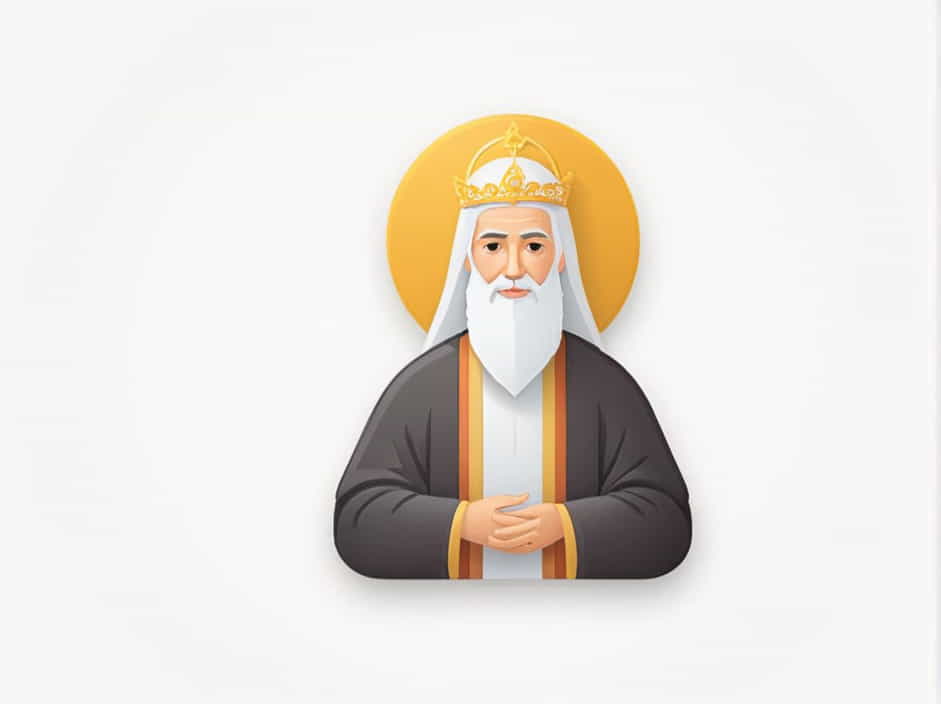
Judaism, one of the world’s oldest monotheistic religions, traces its origins back thousands of years. The forefather of Judaism is widely recognized as Abraham, a key figure in the Hebrew Bible. He is regarded as the first person to form a covenant with God (Yahweh), laying the foundation for the Jewish faith. His story, found in the Book of Genesis, marks the beginning of a religious tradition that has influenced billions of people throughout history.
Abraham: The Patriarch of Judaism
The Call of Abraham
Abraham, originally named Abram, lived in Ur of the Chaldeans, an ancient Mesopotamian city. According to Genesis, God called Abraham to leave his homeland and journey to a new land that would be given to his descendants.
"Go from your country, your people, and your father’s household to the land I will show you. I will make you into a great nation, and I will bless you." (Genesis 12:1-2)
This command marked the beginning of Abraham’s journey as the chosen forefather of the Jewish people.
The Covenant Between God and Abraham
The defining moment of Judaism’s foundation is the Abrahamic Covenant. God promised Abraham three key things:
-
A Great Nation – His descendants would become a mighty people.
-
The Land of Canaan – A homeland for his descendants.
-
A Blessing to All Nations – Through his lineage, the world would be blessed.
In return, Abraham and his descendants were to remain faithful to God’s commandments.
The Sign of the Covenant: Circumcision
As a physical sign of this covenant, God commanded circumcision for all male descendants of Abraham. This practice continues in Judaism today as a fundamental religious tradition.
"This is my covenant with you and your descendants after you, the covenant you are to keep: Every male among you shall be circumcised." (Genesis 17:10)
Abraham’s Descendants and the Birth of Israel
Isaac: The Son of Promise
Abraham’s wife, Sarah, was initially barren, but God promised that she would bear a son in her old age. This son, Isaac, was considered the child of the covenant, through whom the Jewish lineage would continue.
"Your wife Sarah will bear you a son, and you will call him Isaac. I will establish my covenant with him as an everlasting covenant for his descendants after him." (Genesis 17:19)
Jacob: The Father of the Twelve Tribes
Isaac’s son, Jacob, later renamed Israel, had twelve sons who became the patriarchs of the Twelve Tribes of Israel. His descendants formed the nation of Israel, fulfilling God’s promise to Abraham.
"Your name shall no longer be called Jacob, but Israel, for you have striven with God and with men, and have prevailed." (Genesis 32:28)
Abraham’s Influence on Jewish Faith and Identity
The First to Embrace Monotheism
Abraham is often credited as the first person to reject idolatry and recognize the existence of one true God. Unlike the polytheistic beliefs of his time, Abraham’s faith in a single God became the cornerstone of Judaism.
A Model of Faith and Obedience
One of the most defining moments in Abraham’s life was when God tested his faith by commanding him to sacrifice his son, Isaac. Though he was willing to obey, God intervened at the last moment, reaffirming Abraham’s faith and dedication.
"Do not lay a hand on the boy. Do not do anything to him. Now I know that you fear God, because you have not withheld from me your son, your only son." (Genesis 22:12)
This story is a symbol of complete trust and obedience to God, a lesson central to Jewish teachings.
The Legacy of Abraham in Judaism
Abraham in Jewish Prayers and Traditions
Abraham holds a central role in Jewish religious practices. He is mentioned in daily prayers, and his faith serves as an inspiration for Jewish identity and perseverance.
The Connection to the Promised Land
The land of Israel is often referred to as the Promised Land because of God’s covenant with Abraham. Jewish people view Israel as their ancestral homeland, a belief deeply rooted in the Abrahamic tradition.
The Father of the Jewish People
Jews today regard Abraham as their spiritual and biological ancestor. His covenant with God continues to define Jewish religious laws, customs, and the sense of belonging to a unique and chosen people.
Abraham is undeniably the forefather of Judaism. His covenant with God, his unwavering faith, and his role as the patriarch of the Jewish people established the foundation of the Jewish religion. His descendants, through Isaac and Jacob, became the nation of Israel, fulfilling God’s promise. Today, Abraham remains a symbol of faith, obedience, and the enduring legacy of Judaism.