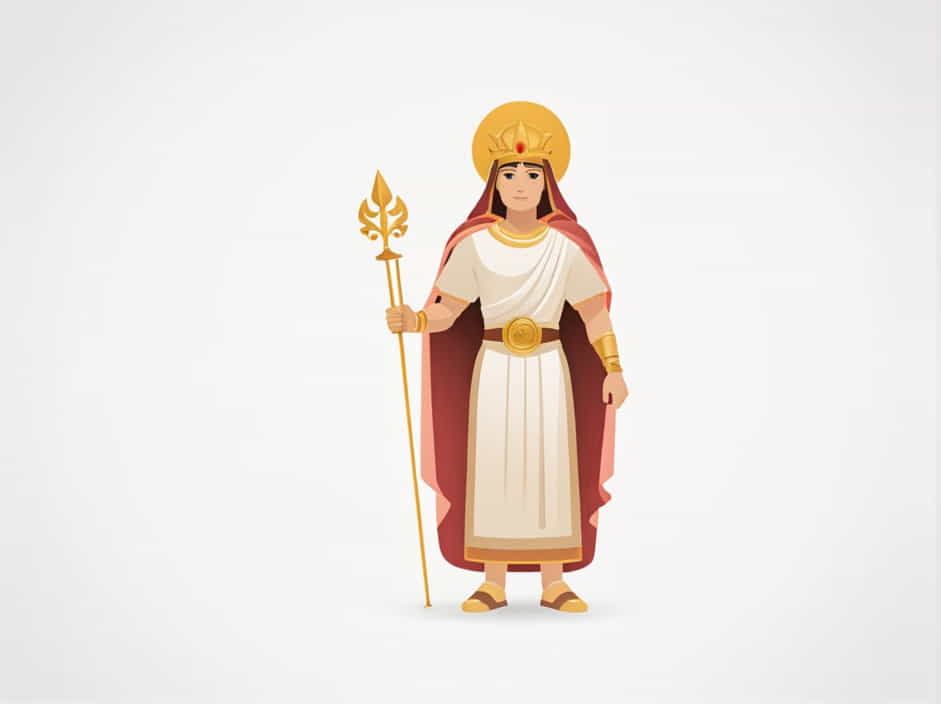
Oedipus is one of the most famous figures in Greek mythology, known for his tragic fate and the fulfillment of a prophecy that shaped his life. He was the son of King Laius and Queen Jocasta of Thebes, but his destiny was marked by a horrifying oracle that foretold his doom. His story, filled with tragedy, fate, and self-discovery, remains one of the most well-known myths in history, immortalized in Sophocles’ play, "Oedipus Rex."
The Prophecy That Shaped Oedipus’ Fate
Before Oedipus was born, his father, King Laius, received a chilling prophecy from the Oracle of Delphi. The prophecy declared that his own son would grow up to kill him and marry his wife, Jocasta. Horrified by this revelation, Laius and Jocasta decided to get rid of their newborn child in an attempt to prevent the prophecy from coming true.
Abandonment of Oedipus
To ensure the baby would not survive, Laius ordered a servant to leave Oedipus on Mount Cithaeron, with his ankles pinned together. This was meant to guarantee his death. However, fate had other plans.
A kind shepherd found the abandoned infant and, unable to leave him to die, took him to King Polybus and Queen Merope of Corinth, who raised him as their own child. They named him Oedipus, meaning "swollen foot," due to the injuries he had sustained.
Oedipus and the Unavoidable Destiny
As Oedipus grew up, he remained unaware that Polybus and Merope were not his biological parents. One day, he visited the Oracle of Delphi, seeking answers about his true identity. Instead of revealing the truth, the oracle delivered a terrifying prophecy:
"You will kill your father and marry your mother."
Shocked and horrified, Oedipus decided never to return to Corinth, believing that Polybus and Merope were his real parents. He set out on a journey that would ultimately lead him to his tragic fate.
The Encounter with Laius
While traveling toward Thebes, Oedipus came across an old man and his entourage on a narrow road. A heated argument ensued over who had the right of way, and in a fit of rage, Oedipus killed the old man and his guards.
Unbeknownst to him, the old man was King Laius-his real father. By doing this, Oedipus unknowingly fulfilled the first part of the prophecy.
Oedipus and the Sphinx
As Oedipus approached Thebes, he encountered a terrifying creature known as the Sphinx. The Sphinx was a monster with the body of a lion, the head of a woman, and the wings of an eagle. It had been terrorizing Thebes, killing anyone who failed to answer its riddle.
The Sphinx posed its famous question:
"What walks on four legs in the morning, two legs at noon, and three legs in the evening?"
Oedipus answered wisely:
"A human, who crawls as a baby, walks on two feet as an adult, and uses a cane in old age."
The Sphinx, defeated and humiliated, threw itself off a cliff, freeing Thebes from its torment. As a reward, the people of Thebes declared Oedipus their new king and gave him Jocasta, the queen, as his wife.
Without realizing it, Oedipus had now married his own mother, fulfilling the second part of the prophecy.
The Truth is Revealed
For many years, Oedipus ruled Thebes wisely and had four children with Jocasta: Eteocles, Polynices, Antigone, and Ismene. However, Thebes was soon struck by a deadly plague, and the people sought answers.
Oedipus, determined to save his city, sent Creon, Jocasta’s brother, to consult the Oracle of Delphi. The oracle revealed that the plague would only end when Laius’ murderer was found and punished.
The Investigation Begins
Oedipus launched an investigation to find the murderer, not knowing that he was searching for himself. During his search, he consulted the blind prophet Tiresias, who reluctantly revealed the truth:
"You are the one who brought this curse upon Thebes. You killed your father and married your mother."
Oedipus refused to believe it at first, but as more evidence surfaced, he was forced to accept the devastating truth.
Jocasta’s Tragic Fate
Upon learning that she had unknowingly married her own son, Jocasta was overwhelmed with horror and shame. Unable to bear the truth, she took her own life by hanging herself in the palace.
Oedipus’ Punishment
Stricken with grief and guilt, Oedipus took two golden pins from Jocasta’s dress and blinded himself, declaring that he did not deserve to see the world after what he had done. He then chose self-exile, leaving his throne to his sons, Eteocles and Polynices.
The Aftermath of Oedipus’ Tragedy
After blinding himself, Oedipus wandered the land as a beggar, guided by his daughter Antigone, who remained loyal to him. Eventually, he found refuge in Colonus, where he was welcomed by King Theseus of Athens.
Before his death, Oedipus received another prophecy stating that his final resting place would bring protection and blessings to the land where he died. He passed away peacefully in Colonus, marking the end of his tragic journey.
Themes and Symbolism in Oedipus’ Story
Oedipus’ tale explores several key themes that have fascinated scholars and readers for centuries:
1. Fate vs. Free Will
Oedipus’ story is the ultimate example of how fate is unavoidable in Greek mythology. Despite his best efforts to escape destiny, every action he took led him closer to fulfilling the prophecy.
2. The Search for Truth
Oedipus is a symbol of human curiosity and the desire for truth. His determination to uncover the murderer of Laius ultimately led him to his own downfall.
3. Guilt and Punishment
Blinding himself represents Oedipus’ acceptance of guilt and responsibility. His suffering serves as a reminder that actions, even if unknowingly committed, have consequences.
4. The Power of Prophecy
The role of the Oracle of Delphi shows how prophecies influence human actions and often lead to their fulfillment, even when people try to prevent them.
Oedipus’ Legacy in Literature and Psychology
Oedipus’ tragic story has inspired countless works of literature, philosophy, and psychology.
-
Sophocles’ Theban Plays – "Oedipus Rex," "Oedipus at Colonus," and "Antigone" explore his life and its consequences.
-
Freud’s Oedipus Complex – Sigmund Freud developed the Oedipus complex, a psychological theory describing a child’s subconscious attraction to the opposite-sex parent.
-
Modern Adaptations – Oedipus’ story continues to influence modern literature, films, and dramas.
The tale of Oedipus, son of Laius and Jocasta, remains one of the most powerful and tragic myths in Greek mythology. His journey-from an abandoned infant to a cursed king-demonstrates the inescapable power of fate.
Despite his intelligence and determination, Oedipus ultimately fell victim to the very destiny he tried to avoid. His story serves as a timeless lesson on the limits of human control, the dangers of pride, and the pursuit of truth at all costs.