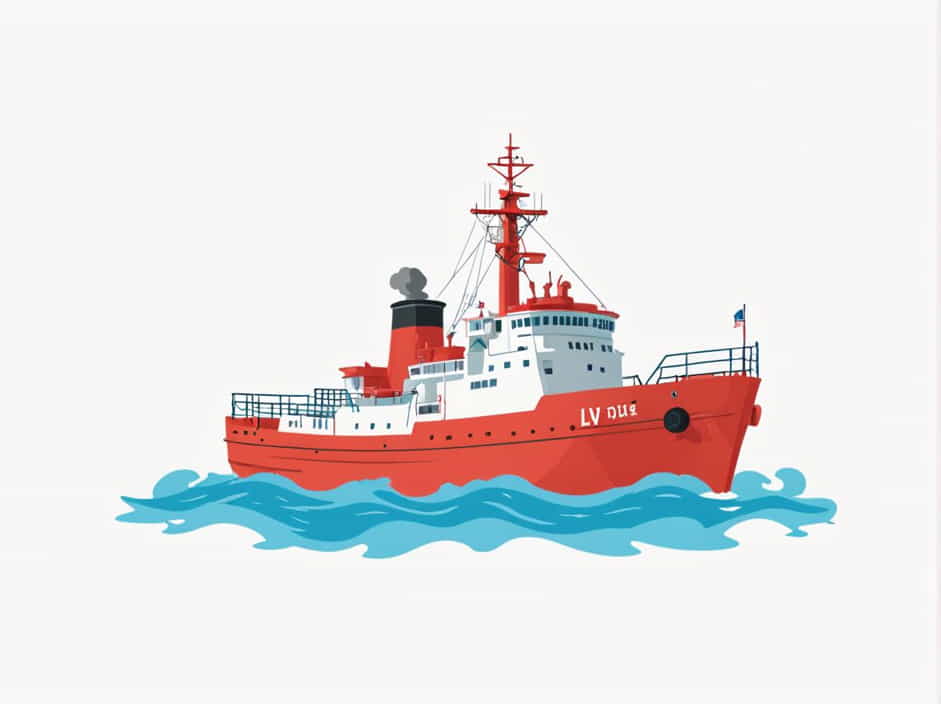
The United States Lightship Portsmouth (LV 101) is an important piece of American maritime history. As one of the floating lighthouses that guided ships safely through dangerous waters, it played a crucial role in ensuring the security of vessels navigating the East Coast. Today, LV 101 is preserved as a museum ship in Portsmouth, Virginia, where visitors can learn about its rich history and the dedication of the crews who operated these essential navigational aids.
What is a Lightship?
A lightship is a specially designed vessel that functions as a floating lighthouse, stationed in areas where constructing a permanent lighthouse was impractical. These ships were deployed to mark dangerous shoals, reefs, and important waterways, ensuring safe passage for maritime traffic.
Lightships were equipped with powerful beacon lights, foghorns, and radio transmitters, allowing them to serve as essential navigation aids. They were staffed by dedicated crews who endured challenging conditions to keep these stations operational.
The Construction and Design of Lightship Portsmouth LV 101
Building a Sturdy Lightship
The United States Lightship Portsmouth (LV 101) was built in 1915 by Pusey & Jones Shipyard in Wilmington, Delaware. It was designed to be a durable and reliable vessel, capable of withstanding harsh weather conditions while maintaining its position at sea.
LV 101 measured 102 feet in length and weighed approximately 400 tons. It was constructed with a riveted steel hull, ensuring longevity and resilience against strong ocean currents and storms.
Equipment and Features
The lightship was outfitted with:
-
A powerful beacon light, mounted on a mast, which could be seen from miles away.
-
A foghorn, used to warn vessels of dangerous waters in poor visibility conditions.
-
A radio beacon, an early technological advancement that transmitted signals to help ships navigate in bad weather.
-
A sturdy anchor system, designed to keep the ship in place despite rough seas.
Service History of Lightship Portsmouth LV 101
Stationed at Various Locations
Throughout its operational years, LV 101 served at multiple locations, marking hazardous maritime zones along the Atlantic coast. Some of its key assignments included:
-
Fenwick Island Shoal, Delaware (1916-1924) – Marked a crucial navigational point for ships traveling along the Mid-Atlantic.
-
Chesapeake Bay, Virginia (1926-1964) – One of the busiest waterways on the East Coast, where the lightship provided essential guidance to vessels entering and exiting the bay.
Though its official name was LV 101, the ship became known as the Portsmouth Lightship due to its eventual preservation in Portsmouth, Virginia.
The Role of Lightship Crews
Life aboard LV 101 was challenging. Crew members spent weeks at sea, maintaining constant vigilance over the ship’s navigational equipment. Their duties included:
-
Operating the beacon light every night to guide ships safely through dangerous waters.
-
Sounding the foghorn in poor weather conditions to alert nearby vessels.
-
Maintaining the ship’s engine and radio beacon to ensure uninterrupted operation.
Isolation, rough seas, and harsh weather made the job demanding, but lightship crews were highly dedicated to their mission of protecting maritime travelers.
The Decommissioning of Lightship Portsmouth LV 101
The Decline of Lightships
By the mid-20th century, advances in automated navigational technology led to the gradual replacement of lightships with buoys and offshore lighthouse towers. These new systems were cheaper to maintain and did not require manned crews.
LV 101 was decommissioned in 1964 after nearly 50 years of service. Its retirement marked the end of an era when lightships played a vital role in maritime navigation.
Preservation as a Museum Ship
Rather than being scrapped, LV 101 was preserved as a floating museum in Portsmouth, Virginia. The city recognized its historical significance and worked to restore and maintain the ship for future generations.
In 1989, it was designated a National Historic Landmark, ensuring its long-term protection and historical recognition.
Lightship Portsmouth LV 101 Today
A Popular Maritime Museum
Today, LV 101 is permanently docked at the Portsmouth Naval Shipyard Museum. Visitors can tour the ship and experience what life was like for lightship crews.
Some of the key attractions include:
-
The captain’s quarters and crew bunks, offering insight into the daily life of sailors.
-
The ship’s beacon and foghorn system, still intact and displayed for visitors.
-
Historical exhibits detailing the importance of lightships in U.S. maritime history.
Educational Programs and Events
The museum offers guided tours, special events, and educational programs to teach visitors about the history of maritime navigation and the essential role that lightships like LV 101 played in ensuring safe passage for sailors.
Why Lightship Portsmouth LV 101 is Important
1. A Testament to Maritime Safety
Lightship Portsmouth LV 101 represents an era when human dedication and innovation were crucial for maritime safety. It stands as a symbol of the hardships and sacrifices made by lightship crews.
2. One of the Last Surviving Lightships
With most lightships decommissioned and scrapped, LV 101 is one of the few remaining vessels of its kind, offering visitors a rare glimpse into a unique chapter of nautical history.
3. An Interactive Educational Resource
As a museum ship, LV 101 allows visitors to step aboard a real lightship and explore its original equipment, gaining a firsthand experience of how these vessels operated.
4. A Historic Landmark in Portsmouth, Virginia
The ship is not only a museum but also a beloved local landmark, attracting history buffs, tourists, and school groups interested in maritime heritage.
The Lasting Legacy of Lightship Portsmouth LV 101
A Reminder of the Past
Though modern navigation technology has made lightships obsolete, LV 101 continues to educate and inspire new generations about the importance of maritime safety.
Preserving a Piece of History
The efforts to maintain Lightship Portsmouth LV 101 as a museum ship ensure that its story remains alive, honoring the dedication of those who served aboard these remarkable vessels.
A Must-Visit Attraction
For anyone visiting Portsmouth, Virginia, a tour of LV 101 is an unforgettable experience. It offers a chance to walk through history, explore an authentic lightship, and appreciate the challenges faced by sailors who once relied on these floating beacons for safe passage.
The United States Lightship Portsmouth (LV 101) played a critical role in guiding ships safely through dangerous waters for nearly 50 years. While its days of active service are over, it remains a cherished historic landmark and a living tribute to maritime history.
Through its preservation as a museum ship, LV 101 continues to educate visitors about the vital role of lightships and the dedication of the men who served aboard them. Whether you’re a history enthusiast or simply curious about America’s maritime past, a visit to Lightship Portsmouth is a journey back in time to an era when these ships were lifelines for sailors navigating the open sea.