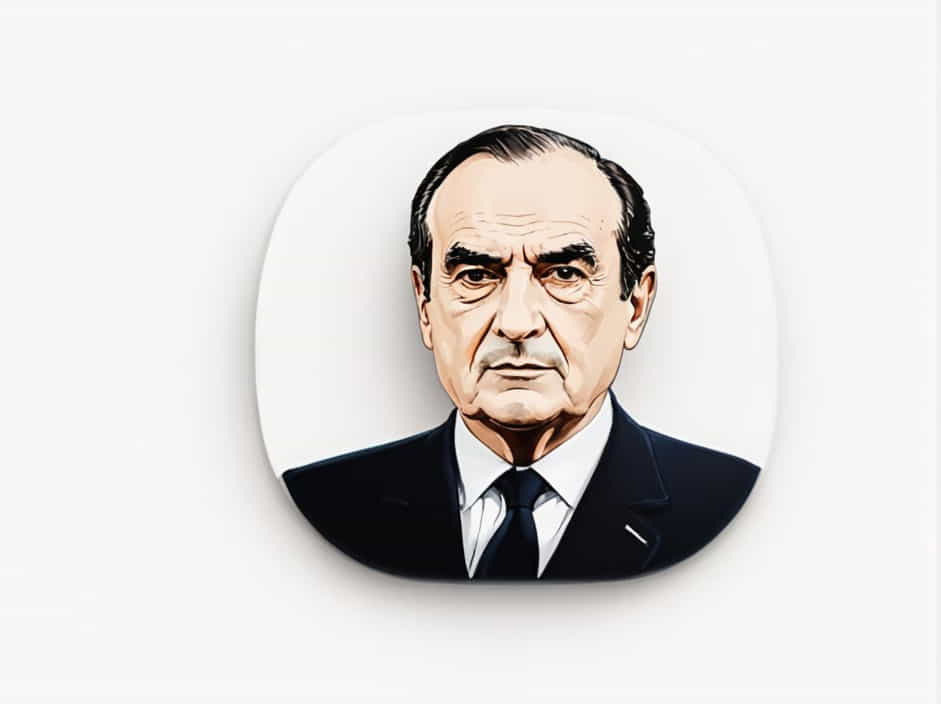
Franà§ois Mitterrand served as the President of France from May 21, 1981, to May 17, 1995, making him the longest-serving president in the history of the Fifth Republic. His presidency lasted 14 years, during which he implemented significant social and economic reforms, navigated a changing global landscape, and left a profound impact on French politics. Mitterrand’s leadership marked a pivotal period in modern French history, and his legacy continues to influence political discussions today.
Early Life and Political Rise of Franà§ois Mitterrand
Who Was Franà§ois Mitterrand?
Franà§ois Mitterrand was born on October 26, 1916, in Jarnac, a small town in western France. He grew up in a conservative Catholic family, and his early years were marked by a traditional upbringing. Mitterrand studied law and political science in Paris, where he began developing an interest in politics.
Entry into Politics
Mitterrand’s political career began in the 1940s. During World War II, he was briefly a prisoner of war before joining the French Resistance. After the war, he entered politics, aligning himself with leftist movements. Over the years, he held various ministerial positions and became a prominent figure in French politics.
Rise to the Presidency
In the 1970s, Mitterrand emerged as the leader of the Socialist Party. He ran for president in 1965 and 1974, narrowly losing both times. However, his persistence paid off in 1981, when he defeated the incumbent, Valéry Giscard d’Estaing, to become France’s first socialist president in the Fifth Republic.
When Did Mitterrand Become President of France?
Franà§ois Mitterrand assumed office as President of France on May 21, 1981. His election marked a significant shift in French politics, as it ended two decades of conservative rule. Mitterrand’s presidency began with high hopes for progressive reforms and a new direction for France.
Significance of His Election
Mitterrand’s victory in 1981 was historic for several reasons:
-
He was the first socialist president of the Fifth Republic.
-
His win reflected a desire for change among the French electorate.
-
It symbolized a shift toward leftist policies and social reforms.
Key Milestones During Mitterrand’s Presidency
1. Social and Economic Reforms (1981-1986)
Mitterrand’s first term was characterized by ambitious social and economic reforms. These included:
-
Nationalization of Industries: Several key industries, including banks and energy companies, were brought under state control.
-
Increased Workers’ Rights: The 39-hour workweek was introduced, along with enhanced vacation benefits and union rights.
-
Abolition of the Death Penalty: One of Mitterrand’s most notable achievements was the abolition of the death penalty in 1981, a move that cemented his commitment to human rights.
While these reforms initially boosted his popularity, they also faced criticism for their economic consequences, including rising unemployment and inflation.
2. Cohabitation Periods
Mitterrand’s presidency was unique in that it included two periods of cohabitation-a situation in which the president and the prime minister come from opposing political parties. These periods were:
-
1986-1988: With Jacques Chirac as prime minister (from the right-wing party).
-
1993-1995: With àdouard Balladur as prime minister (also from the right).
During these times, Mitterrand had to navigate a delicate balance between his socialist ideals and the conservative policies of his prime ministers.
3. European Integration
Mitterrand was a strong advocate for European integration. He played a pivotal role in:
-
The Maastricht Treaty (1992): This treaty laid the groundwork for the European Union and the creation of the euro currency.
-
Strengthening Franco-German Relations: Mitterrand worked closely with German Chancellor Helmut Kohl to promote European unity.
4. Cultural Legacy
Mitterrand prioritized France’s cultural and architectural heritage. He initiated several grand projects, known as "Grands Projets," to modernize the country’s infrastructure. Notable examples include:
-
The Louvre Pyramid, designed by architect I.M. Pei.
-
The Bibliothà¨que Nationale de France (National Library of France).
-
The Grande Arche in La Défense.
When Did Mitterrand Leave Office?
Franà§ois Mitterrand completed his presidency on May 17, 1995, after serving two full terms. He chose not to run for a third term, citing his declining health and the natural end of his political career. He was succeeded by Jacques Chirac, who became the next president of France.
Why Did Mitterrand Serve for 14 Years?
Mitterrand’s presidency lasted 14 years because he was re-elected in 1988, defeating his opponent, Jacques Chirac. His second term focused more on foreign policy and European integration, as well as navigating domestic challenges.
Legacy of Franà§ois Mitterrand
Political Legacy
Mitterrand’s presidency marked a turning point in French politics. His leadership helped solidify the Socialist Party as a major force in French political life. While his policies faced criticism, particularly during economic downturns, his ability to adapt and compromise ensured his long tenure.
Cultural and Social Impact
Mitterrand’s focus on cultural projects and social reforms left a lasting mark on France. His abolition of the death penalty and commitment to European unity are widely regarded as some of his most significant achievements.
Criticism and Controversies
Mitterrand’s presidency was not without controversy. Critics pointed to:
-
Economic struggles during his first term.
-
Allegations of corruption within his government.
-
His secretive nature, including revelations about his personal life and wartime activities.
Interesting Facts About Franà§ois Mitterrand
-
Longest-Serving President: Mitterrand’s 14-year presidency is the longest in the history of the Fifth Republic.
-
A Passion for Literature: Mitterrand was an avid reader and writer, publishing several books during his lifetime.
-
Secret Personal Life: It was revealed after his presidency that he had a second family, a fact he kept hidden throughout his career.
-
Health Issues: Mitterrand battled cancer for much of his presidency, yet he managed to fulfill his duties effectively.
Why Is Franà§ois Mitterrand Still Relevant Today?
Franà§ois Mitterrand’s leadership continues to be studied and debated. His policies on European integration, social reforms, and cultural projects shaped modern France. Additionally, his ability to navigate cohabitation periods and adapt to political challenges is a testament to his political skill.
Franà§ois Mitterrand served as President of France from 1981 to 1995, leaving behind a complex and multifaceted legacy. His tenure was marked by significant social reforms, cultural advancements, and a strong commitment to European unity. While his presidency was not without its challenges and controversies, Mitterrand remains a pivotal figure in French history. His leadership during a transformative period for France and Europe ensures that his impact will be remembered for generations to come.