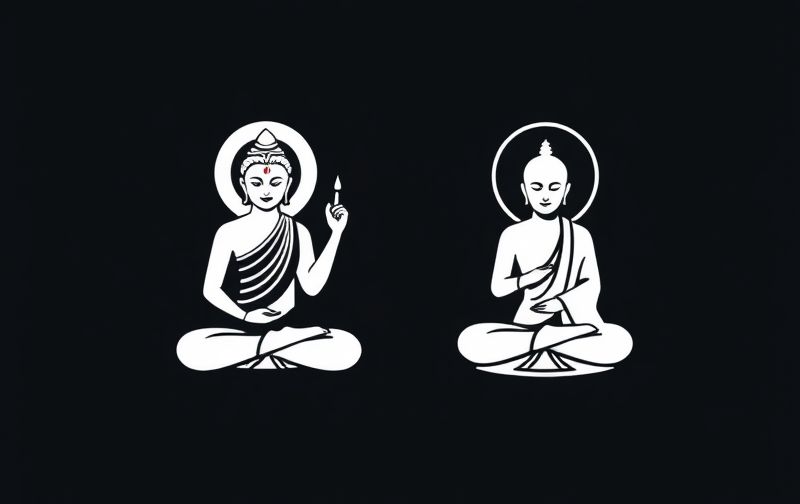
Jainism and Buddhism A Comparative StudyJainism and Buddhism are two ancient religions that originated in India. Both have rich spiritual traditions, philosophical teachings, and a significant influence on the culture, ethics, and spiritual practices of the Indian subcontinent and beyond. Although Jainism and Buddhism share some commonalities, such as their emphasis on non-violence, self-discipline, and the quest for liberation, they also diverge in their beliefs, practices, and philosophical outlooks. This topic provides an in-depth look at the key similarities and differences between Jainism and Buddhism, offering a comprehensive understanding of these two fascinating religions.
Origins and Historical Background
Jainism The Teachings of Lord Mahavira
Jainism is believed to have been founded around the 6th century BCE by Lord Mahavira, although its roots trace back to earlier spiritual figures known as the Tirthankaras. Mahavira is regarded as the 24th Tirthankara and is often considered the central figure in Jainism. He was born into a royal family but renounced his wealth and status at the age of 30 to seek spiritual enlightenment. Through years of rigorous meditation and ascetic practices, Mahavira achieved a state of liberation, known as nirvana. His teachings emphasized the path to spiritual liberation through non-violence (ahimsa), truth (satya), and self-discipline.
Buddhism The Enlightenment of Siddhartha Gautama
Buddhism, on the other hand, was founded by Siddhartha Gautama, known as the Buddha, around the 5th century BCE. Siddhartha was born into a royal family in what is now Nepal but left his luxurious life in search of answers to human suffering. After years of meditation and ascetic practices, he attained enlightenment while meditating under the Bodhi tree. The Buddha’s teachings, known as the Dharma, focused on the Four Noble Truths and the Eightfold Path as the means to overcome suffering (dukkha) and attain nirvana.
Core Beliefs and Philosophical Differences
The Concept of God and the Universe
One of the key differences between Jainism and Buddhism is their view on God. Jainism is a non-theistic religion that does not believe in a creator God. Instead, it teaches that the universe operates according to natural laws and cycles, and it is governed by the principles of karma. Jains believe that the soul is eternal and that individuals are responsible for their own spiritual journey.
In contrast, Buddhism also does not focus on the worship of gods but acknowledges the existence of deities in the Buddhist cosmology. However, the Buddha emphasized that spiritual liberation can only be achieved through personal effort and wisdom, not divine intervention. Both religions stress individual responsibility in the pursuit of spiritual growth, with no need for a god figure to intervene in the process of attaining liberation.
Karma and Reincarnation
Both Jainism and Buddhism share the belief in karma the idea that a person’s actions, thoughts, and intentions determine their future experiences and spiritual progress. In both religions, karma is the driving force behind the cycle of reincarnation, where the soul is reborn into different forms based on accumulated karma from previous lives.
However, the two religions have different perspectives on karma and reincarnation. In Jainism, karma is viewed as a physical substance that attaches to the soul, hindering its spiritual progress. The goal is to shed all karmic attachments through asceticism, self-control, and the practice of non-violence. Liberation, or moksha, is attained when the soul is completely free from karma.
In Buddhism, karma is understood as a moral law of cause and effect. The Buddha taught that actions rooted in ignorance and desire lead to suffering and rebirth, while actions rooted in wisdom and compassion lead to the cessation of suffering and the attainment of nirvana. Buddhism focuses more on the cessation of suffering through the realization of the Four Noble Truths and the practice of the Eightfold Path.
Non-Violence and Ahimsa
Non-violence, or ahimsa, is a central principle in both Jainism and Buddhism. Both religions advocate for compassion and non-harm toward all living beings. However, Jainism places an even stronger emphasis on ahimsa. For Jains, non-violence is the highest moral principle, and they are strict vegetarians to avoid causing harm to animals. Jains also practice extreme caution in their daily lives to avoid even unintentionally harming insects or microorganisms.
Buddhism also emphasizes non-violence and compassion, but it does not enforce the same level of strictness as Jainism. Buddhists are encouraged to cultivate loving-kindness (metta) and compassion (karuna) toward all living beings, but there is less emphasis on avoiding harm to every single living entity in the manner that Jains practice.
Path to Liberation Moksha and Nirvana
In Jainism, the ultimate goal is to achieve moksha, or liberation from the cycle of birth, death, and rebirth. This is accomplished through the purification of the soul from all karmic attachments. Jains believe that by following the teachings of the Tirthankaras, practicing non-violence, and engaging in self-discipline, they can attain a state of perfection and liberation.
In Buddhism, the goal is to achieve nirvana, which is the cessation of suffering and the end of the cycle of rebirth. The Buddha’s teachings guide practitioners along the path to nirvana, which is attained through the realization of the Four Noble Truths and the practice of the Eightfold Path. While both moksha and nirvana involve the cessation of suffering, Jainism focuses more on the elimination of karma, while Buddhism focuses on transcending desire and ignorance.
Practices and Rituals
Jain Practices
Jainism is known for its strict ascetic practices. Devotees engage in rituals to purify the soul, including meditation, fasting, and praying. Jains observe several festivals throughout the year, including Paryushana and Diwali. During these festivals, they focus on self-reflection, repentance, and spiritual growth. Jain temples are important centers of worship, where followers gather for prayers, rituals, and community activities.
Buddhist Practices
Buddhist practices include meditation, mindfulness, and chanting. Meditation is central to Buddhist practice, and there are various forms of meditation aimed at cultivating wisdom, concentration, and mindfulness. Buddhists also participate in rituals, though they are generally less elaborate than those in Jainism. Major Buddhist festivals include Vesak, which celebrates the Buddha’s birth, enlightenment, and death.
Conclusion
Jainism and Buddhism, though sharing some philosophical similarities, each offer unique insights into the nature of suffering, the path to liberation, and the role of non-violence in spiritual practice. Both religions have deeply influenced the spiritual and cultural traditions of Asia and continue to inspire millions of followers around the world. By understanding their origins, beliefs, and practices, we gain a greater appreciation for the richness and diversity of these two ancient paths to enlightenment.