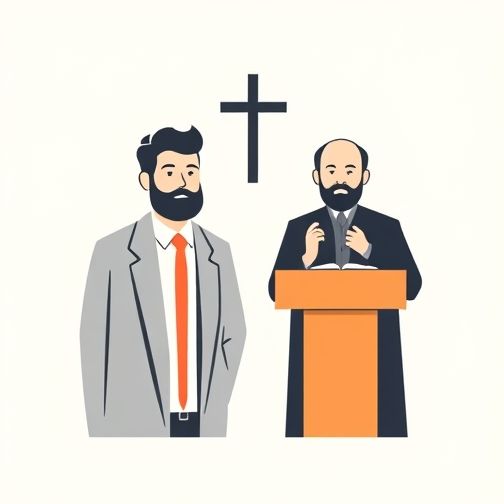
Difference Between Pastor and Preacher Understanding the Roles in ChristianityIn many Christian communities, the terms ‘pastor’ and ‘preacher’ are often used interchangeably. However, these terms have distinct meanings and roles within the church setting. Understanding the difference between a pastor and a preacher is essential for those looking to deepen their knowledge of Christian leadership and ministry. In this topic, we will explore the roles, responsibilities, and distinctions between a pastor and a preacher, shedding light on their unique functions in the faith community.
What is a Pastor?
A pastor is a spiritual leader and shepherd of a congregation, responsible for the overall spiritual care and guidance of a community of believers. The term ‘pastor’ comes from the Latin word for ‘shepherd,’ emphasizing the pastoral role of leading, teaching, and nurturing a flock. In many Christian denominations, the pastor is considered a primary leader who has been called to serve both spiritually and administratively within a church.
Role and Responsibilities of a Pastor
-
Spiritual Leader The pastor’s primary role is to lead the congregation in spiritual matters. This includes preaching, teaching, providing counsel, and offering spiritual guidance to individuals and families.
-
Pastoral Care Pastors are deeply involved in providing pastoral care, including visiting the sick, counseling members in times of crisis, and offering support during difficult moments such as death or illness.
-
Teaching and Discipleship Pastors often lead Bible studies, teach church classes, and provide ongoing discipleship for members, helping them grow in their faith.
-
Administration and Leadership Beyond spiritual care, pastors are often involved in the administrative aspects of church life, overseeing church staff, coordinating ministries, and making important decisions that affect the direction of the church.
-
Sacraments and Ceremonies Pastors typically officiate over important church ceremonies such as baptisms, weddings, and funerals, helping to guide the congregation through significant life events.
Qualifications of a Pastor
To become a pastor, individuals often undergo extensive training, which may include theological education, ministry experience, and sometimes ordination by a denomination. Pastors are generally expected to exhibit qualities such as strong faith, leadership skills, and a deep understanding of Scripture.
What is a Preacher?
A preacher, on the other hand, is primarily focused on proclaiming and teaching the Word of God, usually through preaching sermons. While a preacher may also be a pastor, the role of a preacher is specifically centered around the act of delivering messages that communicate biblical teachings and principles to the congregation.
Role and Responsibilities of a Preacher
-
Preaching The preacher’s main responsibility is to deliver sermons, often during worship services or special events. These sermons typically focus on explaining Scripture, addressing theological topics, and encouraging the congregation to apply Christian principles in their lives.
-
Evangelism Preachers may focus on evangelism, sharing the gospel with those who are not yet believers and encouraging others to come to faith in Christ.
-
Expository Teaching Many preachers specialize in expository preaching, which involves explaining the meaning and context of Scripture in a detailed and accessible manner. This helps the congregation better understand and apply biblical teachings.
-
Public Speaking A preacher is often a skilled communicator, able to engage and inspire the congregation with compelling messages that resonate with their spiritual needs.
Qualifications of a Preacher
While there are no specific formal requirements for someone to be a preacher, many preachers are also pastors or have received training in theology, biblical studies, or ministry. Preachers are often chosen for their ability to communicate the message of the gospel clearly and powerfully.
Key Differences Between a Pastor and a Preacher
While both pastors and preachers share the responsibility of spreading the Word of God, there are key distinctions between their roles
1. Focus of the Role
-
Pastor The pastor’s role encompasses a broader scope, including spiritual leadership, pastoral care, and administration. A pastor is responsible for the overall well-being of the congregation, which includes overseeing church activities, providing counseling, and guiding the church’s mission.
-
Preacher A preacher is specifically focused on delivering sermons and preaching the Word of God. While a preacher may perform other tasks, their primary duty is to communicate biblical teachings and inspire the congregation through preaching.
2. Leadership and Administration
-
Pastor Pastors have administrative duties and are often responsible for the strategic direction of the church. This includes managing church programs, coordinating volunteers, and making decisions about the direction of the congregation.
-
Preacher Preachers may not have administrative responsibilities. Their focus is more on the preaching ministry rather than the management of church operations or oversight of ministries.
3. Spiritual Care and Counseling
-
Pastor Pastors are deeply involved in providing pastoral care, such as offering counseling, visiting the sick, and supporting members of the congregation in times of personal or spiritual need.
-
Preacher While preachers may offer some counseling, their primary role is preaching. They may not be as deeply involved in the personal care of the congregation as a pastor.
4. Titles and Functions Across Denominations
-
Pastor In some denominations, the title of pastor is reserved for individuals who are ordained and serve as the primary leader of a church or congregation.
-
Preacher Preachers can be found in many different church settings, whether they are laypeople, evangelists, or ordained ministers. The role of a preacher is more focused on the act of preaching and spreading the gospel, regardless of their official title.
Overlap Between Pastor and Preacher
Although the roles of a pastor and a preacher are distinct, there is significant overlap between the two. Many pastors are also preachers, meaning they lead a congregation while also regularly preaching sermons. In some cases, a church may have both a pastor and a preacher, with the pastor focusing on the overall leadership of the church, while the preacher focuses specifically on delivering messages to the congregation.
In larger churches, a preacher might be brought in for special events or to lead specific preaching series, while the pastor continues to manage the day-to-day activities of the church. Conversely, in smaller churches, the pastor may take on both roles, providing leadership and delivering the sermons.
The distinction between a pastor and a preacher is an important one within the context of Christian ministry. While both roles are centered around spreading the Word of God, the pastor is more focused on the overall spiritual leadership, care, and administration of a congregation, while the preacher’s main focus is on delivering impactful and biblically sound sermons. Understanding these roles helps clarify the dynamics of church leadership and can deepen one’s appreciation for the work done by both pastors and preachers in nurturing faith communities.