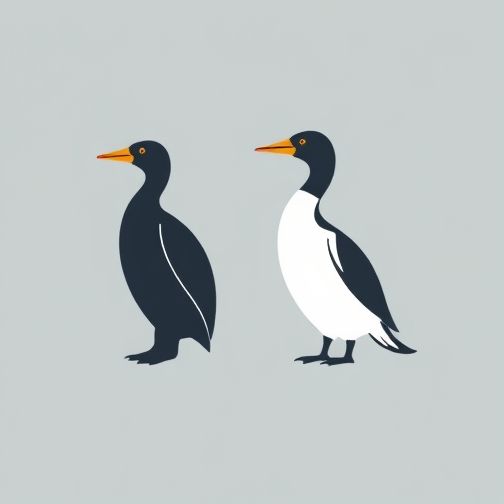
Difference Between Cormorant and Shag Identifying Two Similar SeabirdsWhen it comes to seabirds, two species that are often confused with each other are the cormorant and the shag. Although they share some similarities, there are key differences that set them apart. Understanding these differences is important for birdwatchers and nature enthusiasts, as both birds play significant roles in their ecosystems. This topic will explore the physical features, habitats, behaviors, and other distinguishing characteristics of the cormorant and the shag.
What Is a Cormorant?
Cormorants belong to the family Phalacrocoracidae, which contains several species found around the world. These birds are most known for their diving abilities and are typically seen around coastal areas, lakes, and rivers. Cormorants are large, dark-colored birds with long, slender necks and sharp beaks.
-
Size Cormorants tend to be larger than shags, with some species growing up to 3 feet in length.
-
Plumage Most cormorants have dark plumage, often black or dark greenish, that helps them blend in with their watery environments. Some species also feature a slight sheen to their feathers.
Cormorants are efficient hunters, diving into the water to catch fish and other aquatic prey. They are often seen perched on rocks, drying their wings after a dive, as their feathers lack the waterproofing found in many other waterfowl species.
What Is a Shag?
Shags, also known as the European shag (Phalacrocorax aristotelis) and the various other species of the genus Phalacrocorax, are smaller relatives of cormorants. They share many similarities with cormorants but are generally more slender and shorter.
-
Size Shags are typically smaller than cormorants, averaging around 2 feet in length.
-
Plumage Shags tend to have a more matte finish on their feathers, with some species exhibiting a more striking coloration, like dark green or brownish tones.
Shags are often found in similar coastal habitats as cormorants, diving to catch fish and sea creatures. They are known for their agility in the water, making them excellent hunters.
Key Differences Between Cormorants and Shags
While cormorants and shags may seem similar, they exhibit several key differences in physical features, behaviors, and habitats. Understanding these differences is essential to identifying each bird.
1. Size and Physical Appearance
One of the most noticeable differences between cormorants and shags is their size.
-
Cormorants These birds are generally larger, with some species reaching up to 3 feet in length. Their bodies are robust, and their wingspans can be quite impressive.
-
Shags In contrast, shags are smaller, typically around 2 feet in length, with a more slender build. Their wingspans are also smaller, making them look more streamlined in flight.
In addition to size, their feather texture is slightly different. Cormorants tend to have glossier feathers, while shags’ feathers are more matte, lacking the shiny sheen seen in some cormorant species.
2. Beak and Neck Characteristics
Both birds have long, sharp beaks, but there are subtle differences in their necks.
-
Cormorants Cormorants have longer necks, which are often curved or slightly kinked. Their beaks are strong and hooked, perfect for catching fish.
-
Shags Shags have shorter necks in comparison and a more streamlined body. Their beaks, while still hooked, are generally smaller and more delicate than those of cormorants.
3. Behavior and Feeding Habits
Both cormorants and shags are expert fishers, but their hunting styles can differ slightly.
-
Cormorants Cormorants dive to hunt for fish and are known for their ability to dive deep. They are often seen drying their wings after a dive since their feathers do not repel water as well as other birds. This behavior helps them maintain buoyancy while swimming.
-
Shags Shags are also skilled divers but tend to be more agile than cormorants. They dive more frequently and are often seen diving in quick succession to catch fish. Shags generally have better waterproofing in their feathers, so they do not need to dry off after a dive.
4. Habitat and Distribution
Both cormorants and shags are found in coastal regions, but their range and preferred habitats can vary.
-
Cormorants Cormorants are found worldwide, including in Europe, Asia, Africa, and the Americas. They prefer a variety of habitats, including freshwater lakes, rivers, and coastal waters.
-
Shags Shags are more commonly found in colder regions of Europe, particularly around the British Isles. They are also found in parts of Asia and New Zealand. Shags tend to prefer rocky shorelines and cliffs, where they can easily nest and dive into the sea.
5. Nesting and Reproduction
Both cormorants and shags build nests on cliffs or coastal islands, but there are slight variations in their nesting habits.
-
Cormorants Cormorants build large nests out of sticks and seaweed, usually on rocks or in trees near the water. They lay several eggs, and both parents share incubation duties.
-
Shags Shags build smaller, more compact nests compared to cormorants. They often nest in colonies, with birds nesting close together on rocky cliffs. Shags typically lay fewer eggs than cormorants, with two or three eggs being common.
6. Vocalizations
Both cormorants and shags have distinctive calls, but their vocalizations can vary.
-
Cormorants Cormorants are generally quieter than shags, although they will make deep, guttural sounds when interacting with other birds or when calling to their mates.
-
Shags Shags are more vocal, with a variety of calls that sound like grunts or croaks. These calls are especially common during the breeding season when they are communicating with their mates or protecting their territory.
Conclusion Identifying the Cormorant and the Shag
While cormorants and shags may appear similar at first glance, they have distinct differences that can help birdwatchers and nature enthusiasts tell them apart. The key differences lie in their size, beak and neck characteristics, behavior, habitat preferences, and vocalizations. By paying attention to these features, you can confidently identify these fascinating seabirds in the wild.
Both cormorants and shags are vital to their ecosystems, contributing to the balance of coastal environments through their fishing and nesting behaviors. Understanding these birds and their differences allows us to appreciate their roles in nature while enhancing our birdwatching experience.