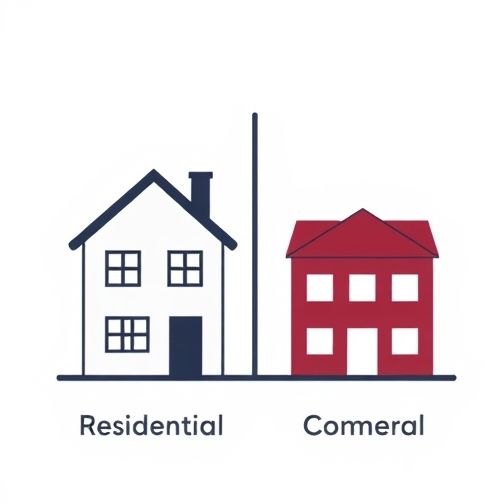
Difference Between Residential and Commercial Properties Key Facts You Should KnowUnderstanding the difference between residential and commercial properties is essential for anyone involved in real estate, whether you’re buying, selling, investing, or developing. Each type of property serves a different purpose and is governed by its own set of rules and expectations. This topic explores the core distinctions between residential and commercial real estate, highlighting their functions, advantages, risks, and how they fit into the broader property market.
What Is a Residential Property?
Residential property refers to real estate used for living purposes. These properties are designed to house individuals or families. They include single-family homes, apartments, condominiums, townhouses, and duplexes.
Common Types of Residential Properties
-
Detached single-family homes
-
Semi-detached houses
-
Apartments or flats
-
Condominiums
-
Townhouses
These properties are usually located in neighborhoods or housing developments, with zoning laws that support domestic use only.
What Is a Commercial Property?
Commercial property is used for business activities. These properties generate income, either directly through rent or indirectly through business operations. They are built or converted to support retail, office, industrial, or hospitality services.
Common Types of Commercial Properties
-
Office buildings
-
Retail stores
-
Warehouses
-
Hotels
-
Restaurants
-
Shopping malls
Commercial properties can be leased to businesses or used directly by owners to run their enterprises.
Main Differences Between Residential and Commercial Properties
1. Purpose and Usage
-
Residential Used for living spaces. Tenants or owners reside in the property.
-
Commercial Used for business operations. It may house offices, shops, or industrial work.
2. Zoning Laws
Zoning regulations strictly separate residential and commercial areas. You can’t typically run a retail shop in a residential zone without special permission. Conversely, you can’t live in a commercial property unless it’s zoned as mixed-use.
3. Tenancy Terms
-
Residential leases are usually shorter (typically 6 months to 1 year), with standard agreements and rent control policies in some areas.
-
Commercial leases tend to be long-term (often 3-10 years) and involve more negotiation regarding rent increases, maintenance, and responsibilities.
Investment Considerations
1. Profitability and Risk
-
Commercial properties generally offer higher returns but come with greater risk and complexity.
-
Residential properties are considered more stable, especially in areas with high housing demand, but may offer lower rental yields.
2. Financing Options
Mortgage terms and interest rates differ. Residential mortgages are often easier to obtain with lower down payments. Commercial loans may require higher deposits and are evaluated based on projected income, not personal credit alone.
3. Management Requirements
Residential properties usually involve direct management with individual tenants. Commercial properties may involve multiple units, long-term lease agreements, and property managers for day-to-day operations.
Legal and Regulatory Differences
Residential properties are governed by tenant protection laws, which are often stricter to protect occupants’ rights. These include
-
Notice periods before eviction
-
Limits on rent increases
-
Requirements for safety inspections
Commercial leases offer more flexibility. Landlords and tenants negotiate terms freely, and there is less regulation on tenant protection. However, this also places more responsibility on the tenant to manage the property during the lease.
Maintenance and Upkeep
Residential properties may have lower maintenance costs, especially for small units or single-family homes. Tenants typically handle minor issues, while landlords manage major repairs.
In commercial buildings, maintenance tends to be more extensive, especially for large structures like office blocks or shopping centers. Leases often include clauses where tenants contribute to maintenance and property taxes, especially in triple net leases (NNN).
Rental Income and Vacancy Rates
Commercial tenants usually pay higher rents and commit to longer leases, which can mean steadier income. However, commercial spaces may remain vacant for longer periods due to the smaller pool of potential tenants and specialized fit-out needs.
Residential properties tend to find tenants more easily, particularly in high-demand areas. Vacancies are often shorter, and the market is broader, but tenant turnover is higher.
Property Value and Market Behavior
Residential property values are influenced by
-
Local housing demand
-
Interest rates
-
School zones and amenities
-
General economic conditions
Commercial property values are tied more directly to the income they generate. The value often depends on
-
The lease terms and tenant stability
-
Location and business activity in the area
-
Capitalization rate (cap rate)
As a result, commercial property prices can be more volatile, especially during economic downturns.
Taxation
The tax treatment of residential and commercial real estate also differs. Investors in commercial property may enjoy higher depreciation benefits and broader deductible expenses, but they also face higher tax rates in some regions.
Residential property owners may be eligible for tax exemptions if the property is their primary residence. Rental income from residential property is usually taxed as personal income.
Which One Is Right for You?
Choosing between residential and commercial investment depends on your goals, risk appetite, and level of experience.
Residential Property Pros
-
Lower entry cost
-
Easier financing
-
Steady tenant demand
-
Simpler legal framework
Residential Cons
-
Lower rental yields
-
Higher tenant turnover
-
Strict tenant laws
Commercial Property Pros
-
Higher income potential
-
Longer lease agreements
-
Tenants often pay more operational costs
Commercial Cons
-
Greater financial risk
-
Complex management
-
Vulnerable to economic cycles
The difference between residential and commercial properties lies in their function, legal framework, investment potential, and management complexity. Residential real estate offers more predictability and is ideal for new investors or those looking for personal use. Commercial property, on the other hand, offers higher returns but comes with greater risks and responsibilities.
Understanding these differences helps you make informed decisions, whether you’re investing, leasing, or developing real estate. Choosing the right type of property ultimately depends on your financial goals, long-term strategy, and risk tolerance.