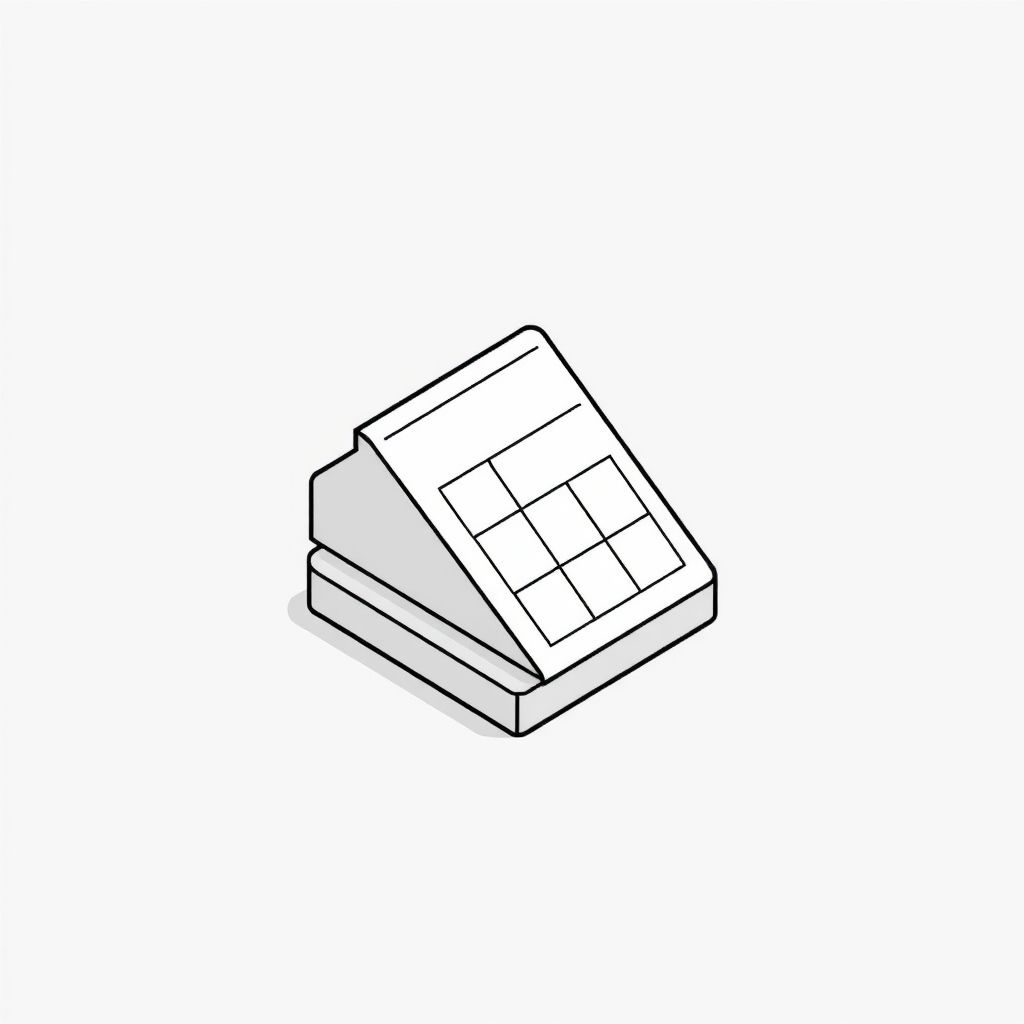
Example of Isometric Drawing Understanding the Basics and ApplicationsIsometric drawing is a method used to represent three-dimensional objects on a two-dimensional surface. This technique allows for a more realistic and accurate depiction of an object, especially when detailed views are required. Whether for engineering, architecture, or graphic design, isometric drawings are a powerful tool. In this topic, we will explore the concept of isometric drawing, provide an example, and discuss its applications in various fields.
What is an Isometric Drawing?
Isometric drawing is a type of axonometric projection, where an object is shown at an angle so that all three dimensions (height, width, and depth) are represented on a flat surface. Unlike perspective drawings, which show objects shrinking as they move further away, isometric drawings maintain the same scale throughout the object. This makes it easier to understand the relative dimensions of the object without distortion.
In an isometric drawing, the object is rotated along its axes so that the three principal axes of the object are equally spaced from each other. This gives the viewer a balanced view of the object, allowing for a more comprehensive understanding of its structure.
Key Features of Isometric Drawings
-
Equal Angles In an isometric drawing, the three axes (X, Y, and Z) are drawn at equal angles of 120 degrees to each other.
-
No Perspective Distortion Unlike perspective drawings, the size of the object remains consistent, regardless of distance.
-
Straight Lines In isometric drawings, all lines parallel to the three main axes are drawn as straight lines, making it easier to create and interpret.
-
Scalability Since all dimensions are shown proportionally, isometric drawings are useful for representing objects at scale.
Example of an Isometric Drawing A Simple Box
Let’s consider a simple example of an isometric drawing a box. A box is a straightforward object that will allow us to demonstrate the core principles of isometric projection.
Step 1 Draw the Axes
To start the isometric drawing, we begin by drawing three lines representing the three principal axes. Each line is drawn at a 30-degree angle from the horizontal. These lines will represent the length (X), width (Y), and height (Z) of the box.
Step 2 Create the Object’s Base
Next, we will draw the base of the box along these axes. Since this is an isometric drawing, we will maintain the correct proportions along the three axes. For example, if the length of the box is 4 units, the width is 3 units, and the height is 5 units, we will draw these dimensions using the isometric grid.
Step 3 Extend the Vertical Edges
The next step is to extend vertical lines along the Z-axis to form the height of the box. These lines will determine the height of the object, and they will be parallel to the vertical axis of the isometric drawing. The height of the box can be 5 units, as defined in the previous step.
Step 4 Complete the Box
Finally, we will draw lines parallel to the X and Y axes to complete the top and sides of the box. These lines will meet at the previously drawn vertical lines, creating the full three-dimensional shape. The final result will be a fully isometric box that accurately represents the three dimensions.
This simple example demonstrates how an isometric drawing maintains proportional relationships while offering a clear, realistic view of the object. The lack of perspective distortion allows the viewer to see all sides of the box at once, making it easier to visualize its structure.
Applications of Isometric Drawings
Isometric drawings are used in many fields due to their ability to represent three-dimensional objects clearly and accurately. Here are a few examples of how isometric drawings are applied in different industries.
Engineering and Design
Isometric drawings are commonly used in engineering to create technical illustrations of machines, parts, and structures. These drawings allow engineers to visualize how different components fit together without the distortion seen in perspective drawings. For instance, a car engine can be illustrated using an isometric drawing to show the internal components and their relative positions.
In addition, isometric drawings are often used in computer-aided design (CAD) software. CAD programs allow designers to create detailed, scalable models of objects, which are then translated into isometric projections for easier understanding and communication.
Architecture
In architecture, isometric drawings help to depict buildings and structures from multiple angles without losing the dimensions or scale. They are particularly useful during the initial design phases when the architect needs to convey the spatial relationships of rooms and features. A floor plan can be complemented by an isometric view to give a better sense of how the space will look in three dimensions.
Additionally, isometric drawings are used to present construction details, like wall sections, to help contractors understand how different materials fit together.
Video Game Design and Animation
Isometric drawing is also prevalent in the world of video game design, especially in older 2D games or games that use an isometric perspective. This is seen in games like SimCity and the original Fallout series. By using isometric projection, designers are able to give the illusion of depth and perspective while maintaining a consistent, grid-based layout for the game world.
In animation, isometric drawings help animators visualize characters and environments in three dimensions, making it easier to depict actions and interactions from different angles.
Product Packaging and Advertising
Isometric drawings are often used in product packaging and advertising to provide a clear and attractive view of the product. This technique is especially useful when showing products that have multiple parts or intricate designs, such as electronics, appliances, or toys. By using isometric projection, designers can showcase the product from several angles, helping consumers understand the features and functionality.
Advantages of Isometric Drawings
-
Clarity Isometric drawings provide a clear, undistorted view of the object, making it easy to understand its structure and proportions.
-
Simplicity Unlike perspective drawings, isometric drawings maintain the same scale throughout the object, which simplifies the drawing process.
-
Efficiency For technical illustrations, isometric drawings save time as they do not require advanced techniques like vanishing points or complex perspective.
-
Accuracy The consistency in scale ensures that measurements are accurate, making isometric drawings ideal for engineering and manufacturing.
Limitations of Isometric Drawings
-
Lack of Depth While isometric drawings provide a 3D view, they can lack the true depth perception seen in perspective drawings. This can sometimes make it harder to visualize certain aspects of the object.
-
Complexity for Intricate Objects For objects with intricate details or complex curves, isometric drawings may not always be the best choice. They are better suited for geometric shapes and structures.
Isometric drawing is a valuable technique for representing three-dimensional objects in two dimensions. By maintaining a consistent scale and angle, isometric drawings provide a clear, realistic view of an object that can be easily interpreted. Whether in engineering, architecture, video game design, or product packaging, isometric drawings are an essential tool in various industries. With its ability to convey depth and dimensions accurately, it continues to be an important method for creating visual representations of complex objects.