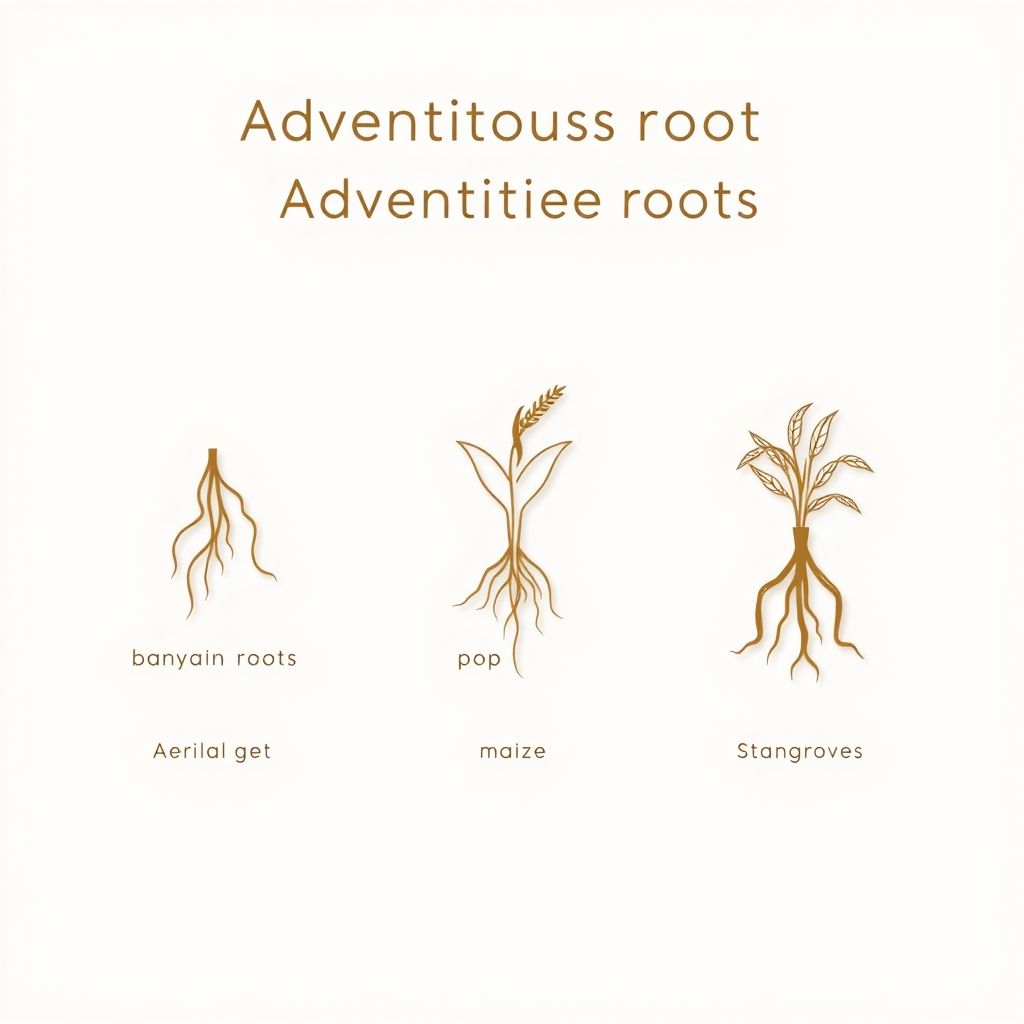
Types of Adventitious Roots with Examples A Complete GuideAdventitious roots are a fascinating part of plant anatomy. Unlike primary roots that develop from a seed’s radicle, adventitious roots grow from other parts of the plant, such as stems, leaves, or old woody roots. These roots are important in plant propagation, survival, and adaptation. In this topic, we’ll explore the different types of adventitious roots with examples, their functions, and where they are commonly found.
What Are Adventitious Roots?
Adventitious roots are roots that arise from an unusual position, not from the root system. They usually grow from stem nodes, internodes, or leaf bases. These roots often appear in response to environmental stress, injury, or as part of a plant’s natural development process.
They can serve multiple purposes providing structural support, storing food, or helping in vegetative reproduction.
Main Functions of Adventitious Roots
Before diving into the types, it’s useful to understand why adventitious roots form and how they help plants
-
Support Help anchor the plant or provide extra balance (as in banyan trees).
-
Storage Store nutrients and water (like in sweet potatoes).
-
Absorption Absorb water and minerals from the soil.
-
Reproduction Aid in asexual or vegetative reproduction.
-
Survival Allow the plant to adapt to stress or damage.
Classification of Adventitious Roots
Adventitious roots can be broadly categorized into three main types based on their function
-
Storage Roots
-
Prop Roots
-
Climbing or Aerial Roots
Let’s go over each type in detail along with some examples.
1. Storage Adventitious Roots
These roots are thick and fleshy. Their primary role is to store food and water, helping the plant survive in tough conditions.
Examples
-
Sweet Potato (Ipomoea batatas) The enlarged roots store starch, making it a rich energy source.
-
Dahlia Produces tuberous roots that store food for the plant during dormancy.
-
Asparagus Has fleshy adventitious roots that act as storage organs.
These roots usually appear swollen and may form in clusters underground.
2. Prop Roots
Prop roots are a type of aerial adventitious root that provide mechanical support to the plant. They usually grow downward from horizontal branches and anchor into the soil.
Examples
-
Banyan Tree (Ficus benghalensis) Prop roots emerge from the branches and grow into the ground, forming pillar-like structures that support the massive canopy.
-
Maize (Zea mays) Grows prop roots from the lower nodes of the stem to give the plant extra stability.
-
Sugarcane Develops prop roots for support, especially in strong winds or rain.
Prop roots are often thick, woody, and easy to spot above ground.
3. Climbing or Aerial Roots
These roots help climbing plants attach to surfaces and support their upward growth. They are usually thin and may absorb moisture from the air.
Examples
-
Money Plant (Epipremnum aureum) Uses aerial roots to climb walls and surfaces.
-
Orchids Have velamen-covered aerial roots that absorb water directly from the air.
-
Ivy (Hedera) Grows small rootlets that cling to walls or tree trunks for support.
These roots don’t grow into the ground but help the plant attach and survive on vertical surfaces.
Other Specialized Types of Adventitious Roots
Besides the major categories above, some plants develop unique kinds of adventitious roots for specific purposes.
1. Stilt Roots
These roots grow obliquely from the lower part of the stem and provide additional support.
- Example Pandanus (Screwpine) grows stilt roots that look like stilts holding the plant above ground.
2. Buttress Roots
Though technically not all adventitious, some tall trees in rainforests form large, wide roots for stability.
- Example Ceiba tree in tropical forests.
3. Pneumatophores
Also known as breathing roots, they are specialized for gas exchange in swampy or marshy areas.
- Example Mangroves like Rhizophora develop these roots that rise above the soil or water surface.
4. Sucking Roots or Haustoria
Found in parasitic plants, these roots absorb nutrients from host plants.
- Example Cuscuta (Dodder) uses haustoria to extract nutrients from the host.
Why Do Plants Develop Adventitious Roots?
Plants form adventitious roots for several reasons
-
Adaptation to environment In waterlogged areas, normal roots can’t breathe; adventitious roots solve this issue.
-
Regeneration after injury Some plants regrow from stems or leaves with adventitious roots after being cut or damaged.
-
Ease of propagation Plants like rose, hibiscus, and money plant grow easily from stem cuttings because of their ability to form adventitious roots.
-
Structural support Helps in standing firm during storms, especially in large or tall plants.
Adventitious Roots in Plant Propagation
Gardeners and farmers often rely on the natural ability of some plants to produce adventitious roots when propagating new plants. Stem cuttings, leaf cuttings, or layering techniques depend on these roots for successful growth.
Common plants used for this include
-
Coleus
-
Rose
-
Hibiscus
-
Pothos (money plant)
-
Bryophyllum (which can produce roots from leaf margins)
Adventitious roots ensure that the new plant gets anchored and starts absorbing nutrients independently.
Adventitious roots are versatile and crucial for many plant functions from support and survival to reproduction and storage. They help plants adapt to different environments and stresses, making them a key part of plant evolution and horticulture. By understanding the types of adventitious roots and seeing real-world examples, we can appreciate how plants manage to thrive under so many different conditions.
Whether it’s the strong prop roots of a banyan tree or the moisture-absorbing aerial roots of an orchid, these structures play a quiet but essential role in keeping the plant world alive and growing.