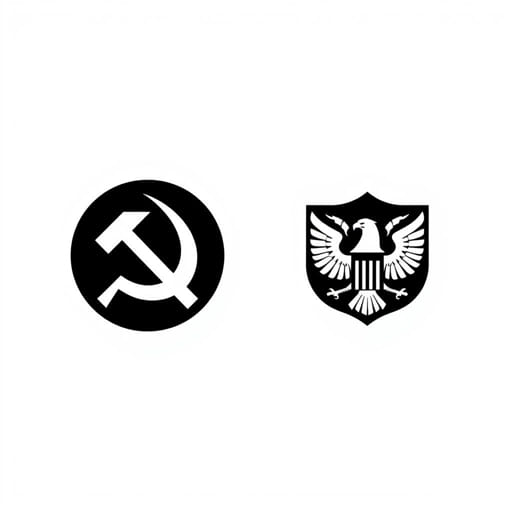
The period following World War II was marked by intense geopolitical rivalry between the United States and the Soviet Union, two superpowers with opposing ideologies. This tension gave rise to a global struggle known as the Cold War. One of the central issues during this time was USSR expansionism, driven by a desire to spread communism, and the corresponding American policy of containment, designed to prevent the spread of Soviet influence. This ideological and political clash shaped international relations, military strategies, and regional conflicts for decades to come.
Origins of Soviet Expansionism
After the devastation of World War II, the Soviet Union emerged as a powerful and territorially expanded nation. Under Joseph Stalin’s leadership, the USSR aimed to secure its borders and extend its influence across Eastern Europe and beyond. By establishing satellite states in Poland, Czechoslovakia, Hungary, Romania, Bulgaria, and East Germany, the Soviet Union effectively created a buffer zone against any future invasions from the West.
Soviet expansionism was rooted in both ideological and strategic concerns. The communist regime sought to promote Marxist-Leninist principles around the world, believing that global revolution would eventually replace capitalist systems. However, it was also motivated by realpolitik a desire to protect its national interests, exert regional dominance, and ensure loyalty from neighboring countries.
The Iron Curtain and the Division of Europe
Winston Churchill famously declared in 1946 that an ‘Iron Curtain’ had descended across Europe, dividing the continent into two spheres of influence: the Western capitalist democracies and the Eastern communist bloc. The Soviet-backed regimes in Eastern Europe suppressed political dissent, curtailed civil liberties, and eliminated opposition parties, consolidating power through central planning and authoritarian control.
This division alarmed American policymakers, who feared that the spread of communism could reach Western Europe, the Middle East, and Asia. The loss of China to communism in 1949 and the Soviet support for communist insurgencies in Greece and Turkey reinforced the belief that the USSR was pursuing a strategy of global domination.
The Truman Doctrine and the Birth of Containment
In response to growing Soviet aggression, President Harry S. Truman announced the Truman Doctrine in 1947. This policy pledged American support to countries threatened by communism, marking the beginning of a long-term commitment to resisting Soviet expansionism. Greece and Turkey were the first beneficiaries of U.S. aid, receiving military and economic assistance to fend off communist threats.
The Truman Doctrine was closely tied to the policy of containment, a strategic framework developed by diplomat George F. Kennan. In his influential ‘Long Telegram’ and subsequent ‘X topic,’ Kennan argued that the United States should contain Soviet influence by countering its advances through political, economic, and military means without direct confrontation.
Marshall Plan and Economic Containment
Economic recovery in Europe was also seen as vital to containing communism. The Marshall Plan, launched in 1948, provided over $12 billion in aid to rebuild war-torn European economies. The program strengthened Western Europe’s resilience against communist ideology by promoting prosperity, stability, and democratic governance. The Soviet Union rejected participation in the plan and pressured its satellite states to do the same, further deepening the East-West divide.
Military Alliances and the Cold War Frontlines
As tensions escalated, the United States and its allies formed the North Atlantic Treaty Organization (NATO) in 1949, a military alliance committed to mutual defense against external aggression. In response, the Soviet Union established the Warsaw Pact in 1955, uniting the Eastern bloc under its leadership.
The Cold War was characterized by a series of indirect confrontations, known as proxy wars, in which the superpowers supported opposing sides in regional conflicts. The Korean War (1950-1953) was one of the first major examples, with the United States backing South Korea and the Soviet Union (along with China) supporting the North. These confrontations were extensions of the broader struggle between Soviet expansionism and U.S. containment.
Espionage and Propaganda
Beyond military interventions, the Cold War also played out through espionage, propaganda, and psychological warfare. Both the CIA and the KGB engaged in covert operations to influence governments, destabilize adversaries, and gain intelligence. The U.S. used tools like Radio Free Europe to broadcast pro-democracy messages into the Eastern bloc, while the USSR promoted anti-Western narratives through its media channels.
Impact on the Developing World
The struggle between the United States and the Soviet Union extended into the developing world, where both powers sought to gain influence over newly independent nations. U.S. containment policy involved supporting anti-communist regimes, even when they were authoritarian, in places like Iran, Guatemala, and Vietnam. Meanwhile, the USSR backed revolutionary movements and leftist governments in Africa, Asia, and Latin America.
These interventions often led to political instability, civil wars, and long-lasting consequences for the regions involved. For example, U.S. support for the Shah of Iran helped maintain Western control over oil resources but also fueled resentment that would eventually contribute to the 1979 Iranian Revolution.
The Cuban Missile Crisis and the Limits of Expansion
One of the most dramatic episodes of the Cold War was the Cuban Missile Crisis in 1962. The Soviet Union’s attempt to place nuclear missiles in Cuba, just 90 miles from the U.S. coast, was seen as a direct challenge to American national security. President John F. Kennedy’s firm stance and naval blockade forced the USSR to withdraw the missiles, but the crisis highlighted how close the world came to nuclear war.
After this confrontation, both superpowers became more cautious in their actions. Treaties like the Nuclear Non-Proliferation Treaty and arms control agreements such as SALT (Strategic Arms Limitation Talks) reflected a mutual desire to reduce the risk of direct conflict while still pursuing their strategic goals.
Legacy of Containment and Expansionism
The policy of containment largely succeeded in limiting the spread of communism during the Cold War. The Soviet Union did expand its influence, but it was unable to achieve global dominance. Over time, internal problems including economic stagnation, political corruption, and resistance within satellite states undermined the Soviet system.
By the late 1980s, reform movements in Eastern Europe and the Soviet Union itself led to dramatic changes. The fall of the Berlin Wall in 1989 and the dissolution of the USSR in 1991 marked the end of Soviet expansionism and the Cold War. U.S. containment policy, though costly and sometimes controversial, played a central role in shaping this outcome.
The Cold War era, defined by the contest between USSR expansionism and U.S. containment, profoundly influenced global politics in the 20th century. This ideological battle played out through military alliances, economic aid, proxy wars, and covert operations. While the Soviet Union aimed to spread communism and extend its control, the United States mobilized resources and alliances to resist this threat. The legacy of this confrontation continues to shape international relations and offers important lessons about power, ideology, and the complexities of global conflict.