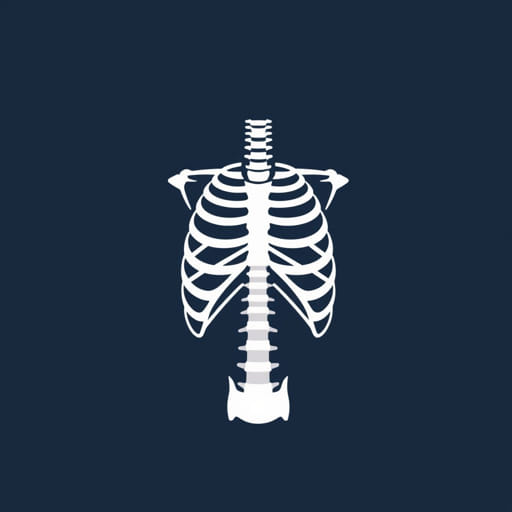
Vertebral Column and Thoracic Cage Essential Components of the Human SkeletonThe human skeleton is a complex and highly functional structure that supports the body, facilitates movement, and protects vital organs. Among its many components, the vertebral column (spine) and the thoracic cage (rib cage) are crucial for protecting the spinal cord and vital organs such as the heart and lungs. These structures not only provide support and protection but also allow flexibility and mobility necessary for daily activities. In this topic, we will explore the vertebral column and thoracic cage, their functions, and their importance in maintaining the overall structure and function of the body.
What Is the Vertebral Column?
The vertebral column, also known as the spine or backbone, is a bony structure that runs along the length of the back. It serves as the central support for the body, enabling a person to stand upright and carry out various movements such as bending, twisting, and rotating. The vertebral column also houses and protects the spinal cord, which is a vital part of the central nervous system that transmits signals between the brain and the rest of the body.
Structure of the Vertebral Column
The vertebral column is made up of 33 vertebrae, which are individual bones stacked on top of each other. These vertebrae are categorized into five regions based on their location
-
Cervical Region (Neck) This consists of seven vertebrae (C1 to C7). The cervical region supports the head and allows for a range of motion, including nodding and rotating the head.
-
Thoracic Region (Upper Back) There are twelve vertebrae (T1 to T12) in the thoracic region, which are attached to the ribs. This region is less flexible but provides stability for the upper body.
-
Lumbar Region (Lower Back) The lumbar region contains five vertebrae (L1 to L5). These vertebrae bear most of the body’s weight and provide flexibility for bending and lifting.
-
Sacral Region This region consists of five fused vertebrae (S1 to S5) that form the sacrum, a triangular-shaped bone at the base of the spine. The sacrum connects the spine to the pelvis.
-
Coccygeal Region (Tailbone) This region is composed of four fused vertebrae (Co1 to Co4) that form the coccyx, or tailbone.
Each vertebra is separated by intervertebral discs, which act as shock absorbers and allow for movement between the bones. These discs are made of a gel-like substance that provides flexibility and prevents bones from rubbing against each other.
Functions of the Vertebral Column
The vertebral column serves several important functions, including
-
Support The spine provides structural support for the head, neck, and torso, allowing for upright posture and weight-bearing activities such as standing and walking.
-
Protection The vertebral column encases the spinal cord, protecting it from physical injury. The spinal cord is a critical part of the nervous system, transmitting signals to and from the brain.
-
Movement The vertebrae and intervertebral discs allow for a range of movements, including bending, twisting, and turning. The flexibility of the spine is essential for everyday tasks such as sitting, reaching, and lifting.
-
Shock Absorption The intervertebral discs absorb shock and prevent excessive strain on the spine, particularly during activities that involve impact, such as walking, running, or jumping.
What Is the Thoracic Cage?
The thoracic cage, also known as the rib cage, is a bony structure that encases the organs in the chest, including the heart and lungs. The thoracic cage consists of the thoracic vertebrae, ribs, and sternum, and plays a key role in protecting these vital organs from injury. In addition to protection, the thoracic cage also aids in respiration and provides structural support for the upper body.
Structure of the Thoracic Cage
The thoracic cage is composed of the following elements
-
Ribs There are twelve pairs of ribs in the human body. Each rib is attached to a thoracic vertebra in the spine at the back and curves around to the front. The ribs are categorized as follows
-
True Ribs The first seven pairs of ribs are called true ribs. They are directly attached to the sternum via costal cartilage.
-
False Ribs The next three pairs (ribs 8-10) are called false ribs. These ribs do not directly connect to the sternum but are attached to the cartilage of the ribs above them.
-
Floating Ribs The last two pairs of ribs (ribs 11 and 12) are called floating ribs. These ribs do not attach to the sternum or to other ribs in the front and are therefore "floating."
-
-
Sternum The sternum, or breastbone, is a flat bone located at the center of the chest. It connects to the ribs via costal cartilage and serves as the attachment point for several muscles, including those involved in breathing.
-
Thoracic Vertebrae As mentioned earlier, the thoracic region of the vertebral column consists of twelve vertebrae (T1 to T12). These vertebrae provide attachment points for the ribs and play a crucial role in maintaining the shape and function of the thoracic cage.
Functions of the Thoracic Cage
The thoracic cage serves several essential functions
-
Protection The primary function of the thoracic cage is to protect the heart, lungs, and other organs within the chest cavity. The rib cage forms a rigid barrier that shields these vital structures from physical trauma.
-
Breathing The thoracic cage plays a key role in respiration. During inhalation, the diaphragm and intercostal muscles (muscles between the ribs) contract, causing the rib cage to expand. This increases the volume of the chest cavity, allowing the lungs to fill with air. During exhalation, the rib cage contracts, and air is expelled from the lungs.
-
Support The thoracic cage provides structural support for the upper body, allowing for upright posture and enabling movements such as twisting and bending.
-
Attachment for Muscles The sternum, ribs, and thoracic vertebrae serve as attachment points for several muscles, including those involved in breathing, posture, and arm movement.
Disorders and Injuries Related to the Vertebral Column and Thoracic Cage
Both the vertebral column and thoracic cage are susceptible to various disorders and injuries that can affect their function and the protection they provide. Some common conditions include
-
Spinal Injuries Trauma to the spine can result in fractures, dislocations, or damage to the spinal cord. This can lead to pain, loss of movement, and, in severe cases, paralysis.
-
Scoliosis Scoliosis is a condition in which the spine curves abnormally, often forming an "S" or "C" shape. This can lead to discomfort, difficulty breathing, and other complications.
-
Rib Fractures Rib fractures are common injuries caused by trauma, such as a fall or car accident. Fractured ribs can lead to pain, difficulty breathing, and, in some cases, damage to the internal organs.
-
Costochondritis This is the inflammation of the cartilage connecting the ribs to the sternum. It can cause chest pain that mimics a heart attack but is usually harmless.
Conclusion
The vertebral column and thoracic cage are critical components of the human body that provide support, protection, and allow for essential functions like movement and breathing. The vertebral column serves as the main support structure, protecting the spinal cord, while the thoracic cage shields the heart and lungs and aids in respiration. Together, these structures play a vital role in maintaining the body’s integrity and overall health. Understanding their functions and the importance of keeping them healthy is key to maintaining optimal bodily function.