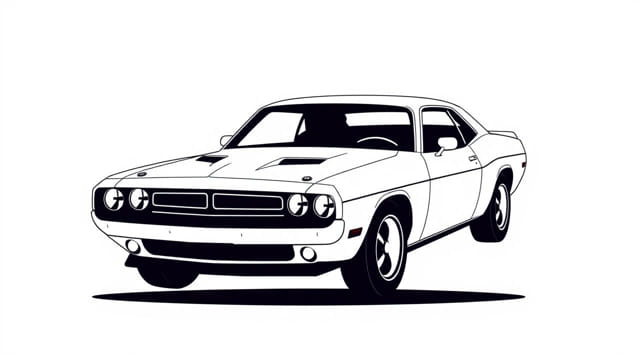
Few terms in automotive culture evoke as much raw excitement and nostalgia as muscle car. These powerful vehicles, known for their aggressive styling and roaring engines, have become a symbol of American performance, freedom, and rebellion. Often featured in movies, car shows, and high-speed races, muscle cars represent a distinct era in automotive history where horsepower reigned supreme. Understanding what a muscle car truly is goes beyond just looks and speed it’s about the blend of engineering, affordability, and attitude that defined a generation of driving enthusiasts.
Defining a Muscle Car
What Makes a Car a Muscle Car?
A muscle car is typically defined as a mid-sized American car with a powerful V8 engine, rear-wheel drive, and a relatively affordable price tag. While sports cars focus on agility and luxury vehicles highlight comfort, muscle cars prioritize straight-line speed and brute power. They are usually two-door coupes but can also be found as convertibles or even four-door models in some cases.
Key Characteristics
- High-displacement V8 engines– often 5.0 liters or larger
- Rear-wheel drivefor optimal power delivery
- Lightweight chassisfor better speed-to-weight ratio
- Bold stylingwith aggressive lines, scoops, and stripes
- Affordable price pointcompared to exotic or luxury cars
The Origins of the Muscle Car
The 1960s Boom
The golden era of muscle cars began in the early 1960s in the United States. Automakers like Pontiac, Dodge, Chevrolet, and Ford started installing large V8 engines into relatively small and lightweight bodies. The 1964 Pontiac GTO is often considered the first true muscle car, kicking off a competitive trend that would explode across the decade.
Competition and Innovation
By the late 1960s and early 1970s, muscle cars were everywhere. Models like the Dodge Charger, Ford Mustang, Chevrolet Camaro, and Plymouth Barracuda dominated the streets and racetracks. Each brand pushed the envelope in horsepower and performance, leading to ever more aggressive designs and powerful engines.
Iconic Muscle Cars Through the Years
Classic Legends
Some of the most iconic muscle cars from the 1960s and 1970s include:
- Pontiac GTO– Often credited with starting the muscle car movement
- Ford Mustang– A pioneer of the pony car segment with muscle roots
- Chevrolet Camaro SS– A fierce rival to the Mustang with high horsepower
- Dodge Charger R/T– Known for its bold looks and racing success
- Plymouth Road Runner– A no-frills muscle car built for speed
Modern Muscle Cars
While the muscle car era declined in the late 1970s due to emissions regulations and fuel crises, the 2000s saw a strong revival. Today’s muscle cars combine vintage aesthetics with modern technology:
- Dodge Challenger Hellcat– Over 700 horsepower with retro styling
- Chevrolet Camaro ZL1– Track-ready and incredibly fast
- Ford Mustang GT– Continuously evolving, yet true to its roots
What Sets Muscle Cars Apart from Other Performance Cars
Muscle Car vs Sports Car
While both are performance-oriented, muscle cars and sports cars are not the same. Sports cars like the Porsche 911 or Mazda MX-5 emphasize cornering, handling, and lightweight construction. In contrast, muscle cars focus on raw straight-line acceleration and loud engine performance. They may be less nimble but are more visceral in power delivery.
Muscle Car vs Pony Car
The term pony car is often confused with muscle car. Pony cars, such as the Ford Mustang and Chevy Camaro, are generally smaller, sportier coupes with performance options. Some pony cars evolve into muscle cars when equipped with larger engines and performance upgrades, blurring the lines between categories.
The Cultural Impact of Muscle Cars
In American Pop Culture
Muscle cars have become ingrained in American culture. They appear in films like Bullitt, The Fast and the Furious, and Vanishing Point, where their dramatic presence and roaring engines take center stage. They symbolize rebellion, youth, and the open road values deeply rooted in American identity.
Collector’s Items and Restorations
Today, classic muscle cars are highly sought after by collectors. Restoring vintage models to their original condition or even modifying them with modern parts has become a popular hobby. The value of some rare models has skyrocketed, making them prized possessions in the car enthusiast world.
Performance and Engineering
What’s Under the Hood?
The beating heart of a muscle car is its powerful engine. Most traditional models used naturally aspirated V8s with carburetors, producing massive torque. Modern muscle cars now feature fuel injection, turbocharging or supercharging, and advanced computer systems, delivering incredible performance without sacrificing reliability.
Transmission and Drivetrain
Muscle cars are usually paired with either manual or automatic transmissions, depending on the model and year. Manual gearboxes offer a more engaging experience, while automatics allow for smoother daily driving. Rear-wheel drive remains standard for most muscle cars, contributing to their ability to perform burnouts and power slides with ease.
Challenges and Criticism
Fuel Efficiency
One common critique of muscle cars is their poor fuel economy. Large V8 engines consume more gasoline than smaller, turbocharged four-cylinders or hybrids. However, technological advancements have improved mileage somewhat in modern models.
Handling and Ride Comfort
Compared to modern sports sedans or high-end coupes, some muscle cars may feel rough or less refined in handling. They’re built for speed in a straight line, not necessarily for winding mountain roads. That said, suspension and chassis improvements in newer models have addressed many of these issues.
The Future of Muscle Cars
Electric Muscle Cars
As the automotive industry moves toward electrification, even muscle cars are beginning to adapt. Dodge has announced plans for an all-electric muscle car, and other manufacturers are exploring hybrid or electric options. These vehicles aim to retain the power and presence of traditional muscle cars while embracing sustainability and emissions standards.
Preserving the Legacy
While change is inevitable, the spirit of the muscle car is unlikely to fade. Whether powered by gasoline or electricity, the combination of performance, affordability, and bold design will continue to captivate drivers around the world.
A muscle car is more than just a fast vehicle it’s a symbol of freedom, performance, and American ingenuity. From their golden age in the 1960s to their high-tech revivals today, muscle cars continue to inspire awe and admiration. Whether you’re a longtime enthusiast or just beginning to explore automotive culture, understanding what defines a muscle car helps you appreciate its lasting impact on car history and modern driving excitement. With their unmistakable sound, bold look, and raw power, muscle cars have earned their place as icons of the road.