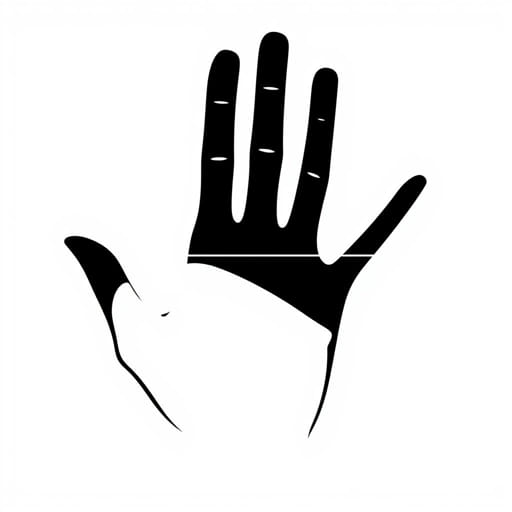
What Is a Simian Line? Understanding the Significance and MeaningA simian line is a unique and distinct feature that appears on the palms of some individuals. It is characterized by a single, continuous line that runs across the palm, rather than the usual two lines – the heart line and the head line – that are typically found in the palm of the hand. The simian line, also known as the ‘single transverse palmar crease,’ has fascinated people for centuries and is often the subject of curiosity. In this topic, we will explore what a simian line is, its potential causes, significance, and the myths surrounding it.
What is a Simian Line?
A simian line is a crease that appears on the palm, which is a single horizontal line that runs across the hand. It combines what would typically be two separate lines, the heart line and the head line, into one continuous line. The name ‘simian’ comes from the resemblance to the palm lines of some primates, such as monkeys and apes, who often have a similar line structure on their palms.
While most people have two main lines on their palms, some individuals have only one, and this single line is known as the simian line. It can appear on one or both hands, although it is more commonly seen on the left hand.
Structure of a Palm
Before delving deeper into the significance of the simian line, it is important to understand the basic structure of the palm. The human palm typically contains three major lines
-
Heart Line The heart line runs along the top of the palm and is associated with emotions, relationships, and love.
-
Head Line The head line runs horizontally across the palm and is associated with intellect, decision-making, and reasoning abilities.
-
Life Line The life line curves around the base of the thumb and is associated with general health and vitality.
In most people, the heart and head lines are separate, but when they merge into one continuous line, it forms the simian line. This can make the hand appear unique, and people with this characteristic often wonder if it holds any deeper meaning.
How Common is the Simian Line?
The simian line is not extremely rare, but it is also not very common. Research suggests that approximately 1 in 30 people have a simian line on at least one of their hands. The occurrence is slightly more frequent in males than females, although it can be seen in both genders.
It is more commonly found in individuals of East Asian and Native American descent. In fact, certain studies show a higher frequency of the simian line in these populations compared to others.
Causes of a Simian Line
While the exact cause of the simian line is not fully understood, it is believed to be a result of genetic factors. A person with a simian line might inherit it from their parents, or it may occur as a spontaneous genetic variation during fetal development.
During fetal development, the formation of the lines on the palms is a complex process. The presence of a simian line could be due to a developmental anomaly or variation that results in the fusion of the heart and head lines. However, most people with this line do not have any other visible physical abnormalities, and their development is normal.
In some cases, the presence of a simian line can be associated with certain genetic conditions, but it is important to note that having a simian line does not necessarily mean a person has a medical disorder.
Significance and Interpretation of the Simian Line
Throughout history, the simian line has been the subject of various interpretations, particularly in the field of palmistry. Palmistry, also known as chiromancy, is the practice of reading and interpreting the lines, mounts, and other features of the hand to understand a person’s personality and future.
In Palmistry
In palmistry, the simian line is believed to indicate a person with a strong, single-minded personality. It is often associated with traits such as
-
Intensity People with a simian line are believed to be intense in their thoughts and actions. They may have a strong focus and determination.
-
Emotional and Intellectual Fusion Since the heart and head lines are merged, it is said that these individuals may experience a deep connection between their emotions and intellect. They may approach situations in a way that blends both logic and emotion.
-
Impatience Some palmists associate the simian line with impatience or a tendency to act impulsively. Individuals with this line may be quick to make decisions and may struggle with indecisiveness.
In Medical Terms
In the medical field, the presence of a simian line is sometimes noted during physical exams, but it is not typically seen as a cause for concern unless it is associated with other symptoms. A simian line can sometimes be found in individuals with certain genetic disorders, such as
-
Down Syndrome Many individuals with Down syndrome (Trisomy 21) exhibit a simian line as one of the common physical characteristics. However, it is important to note that not all individuals with Down syndrome have a simian line, and not everyone with a simian line has Down syndrome.
-
Aarskog Syndrome This rare genetic disorder, which can cause developmental delays and other physical anomalies, may also present with a simian line.
It is important to emphasize that while the simian line may be a physical marker for certain conditions, its presence alone is not an indicator of a disorder.
Myths and Misconceptions About the Simian Line
Over the centuries, the simian line has been surrounded by many myths and misconceptions. Some people believe that it predicts a person’s fate or that it reveals hidden qualities of a person’s character. While palmistry can offer insights into personality traits, it is essential to understand that the presence of a simian line does not have any scientifically proven significance beyond its developmental cause.
Some myths about the simian line include
-
It is a sign of genius While some palmists associate the simian line with intellectual intensity, there is no scientific evidence to suggest that individuals with this line are more intelligent or gifted than others.
-
It predicts an early death Some old myths claimed that a simian line signified a short life or early death. However, there is no basis for this belief, and it should be viewed as nothing more than superstition.
-
It indicates mental illness Some people believed that those with a simian line were more likely to suffer from mental health disorders. However, there is no evidence to support this idea, and mental health is influenced by a variety of factors, not palm lines.
The simian line is a distinct feature that appears on the palms of some individuals, characterized by a single, continuous crease that merges the heart and head lines. It can be found in approximately 1 in 30 people and is thought to be a result of genetic factors or developmental variations. While it has fascinated people throughout history and is often linked to palmistry, it is important to note that the presence of a simian line does not have any direct medical or psychological implications unless associated with specific genetic conditions. As with all physical traits, it is essential to approach the simian line with an open mind and not let myths and misconceptions shape our understanding of its true significance.