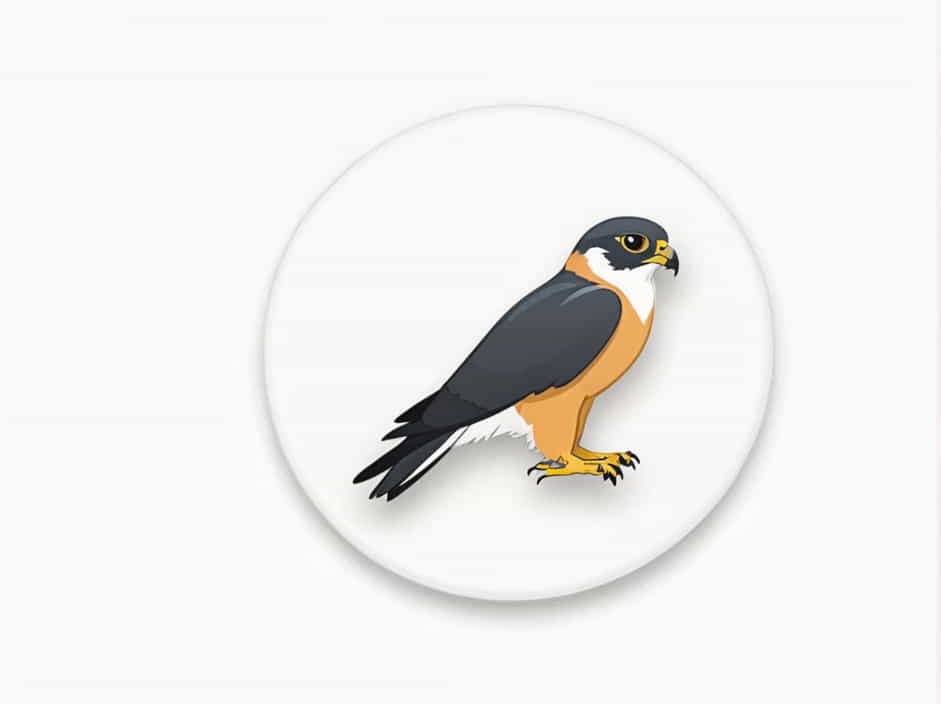
The peregrine falcon is renowned for its incredible speed and agility, making it one of the most formidable predators in the bird world. Known for its dramatic hunting dives, this bird is capable of reaching astonishing speeds that are hard to match in the animal kingdom. In this topic, we will explore the top speed of a peregrine falcon, how it achieves such high speeds, and the various factors that contribute to its remarkable abilities.
Understanding the Peregrine Falcon
The peregrine falcon (Falco peregrinus) is a bird of prey found all over the world, from urban skyscrapers to remote mountain ranges. It is instantly recognizable by its distinctive markings-blue-gray feathers on the back, a white underside, and a black “mustache” marking on its face. This falcon is known for its exceptional hunting abilities, primarily targeting other birds during flight.
What sets the peregrine falcon apart from other birds is its hunting technique. Unlike many birds of prey that hunt by swooping down at their prey in a straight line, the peregrine falcon uses a high-speed dive, called a “stoop,” to catch its quarry mid-air. This dive is where the falcon reaches its highest speeds, making it the fastest bird, and possibly the fastest animal, on the planet.
What Is the Top Speed of a Peregrine Falcon?
The peregrine falcon’s top speed is a subject of fascination and study. During its hunting dive, the peregrine falcon can reach speeds of over 240 miles per hour (386 kilometers per hour), a speed that makes it not only the fastest bird but also the fastest animal in the world.
To put this in perspective, the peregrine falcon’s stoop is much faster than the speed of a sports car on the highway. This incredible speed allows the falcon to swoop down on prey with immense precision, overwhelming its target before it even has a chance to react.
How Does the Peregrine Falcon Achieve Such High Speeds?
Aerodynamics of the Stoop
The key to the peregrine falcon’s speed lies in its unique hunting technique-the stoop. When the falcon spots its prey, it climbs to an impressive height, often several hundred meters, before diving steeply towards its target. During this dive, the falcon uses its body shape and aerodynamic design to minimize drag and maximize speed.
The peregrine falcon’s pointed wings and streamlined body reduce air resistance, while its muscular body allows it to dive with power and precision. The bird tucks its wings close to its body to minimize drag, creating a shape similar to a missile. This enables the falcon to dive at high speeds without being hindered by the wind.
Powerful Muscles and Specialized Adaptations
Peregrine falcons also have powerful chest muscles that allow them to maintain high speeds during their dive. These muscles are specially adapted for fast, controlled flight, giving the bird the strength it needs to perform rapid dives and quick changes in direction. Their large, strong breast muscles are essential for maintaining flight control while reaching such astonishing speeds.
In addition, the peregrine falcon’s respiratory system is designed to cope with the extreme forces involved in high-speed dives. Their strong beaks and specially adapted nostrils help regulate airflow and prevent damage from the intense pressure experienced during a stoop. These features enable the falcon to perform its high-speed dive repeatedly without harm.
The Importance of Speed in Hunting
The peregrine falcon’s incredible speed is a critical part of its hunting strategy. The bird’s primary prey is other birds, many of which are fast fliers themselves, such as pigeons, ducks, and shorebirds. To catch these fast-moving targets, the peregrine falcon needs to be even faster.
By diving at speeds of over 240 miles per hour, the peregrine falcon can close the distance to its prey quickly, allowing it to strike before the prey has a chance to escape. The speed of the dive also reduces the chances of the prey avoiding the attack, as the falcon can hit its target with remarkable accuracy and force.
The stoop is a technique that involves intense focus and skill. The peregrine falcon can maintain precise control over its dive, adjusting its trajectory and speed to account for the movement of the prey. This ability to make rapid adjustments in flight is another factor that contributes to the falcon’s success as a hunter.
Speed vs. Other Birds of Prey
While the peregrine falcon holds the title for the fastest bird, it is not the only bird of prey that exhibits impressive speed. Other birds, such as the golden eagle and the red-tailed hawk, are also fast fliers, though they do not reach the extreme speeds of the peregrine falcon.
Golden Eagle Speed
The golden eagle is one of the largest and most powerful birds of prey, capable of reaching speeds of about 150 to 200 miles per hour (241 to 322 kilometers per hour) during its hunting stoop. While not as fast as the peregrine falcon, the golden eagle is still a formidable hunter and can catch large prey, such as deer and mountain goats, using its impressive speed and strength.
Red-Tailed Hawk Speed
The red-tailed hawk is another bird of prey known for its speed, though it does not compare to the peregrine falcon. Red-tailed hawks can reach speeds of about 120 miles per hour (193 kilometers per hour) during a dive. While this is still fast, it falls short of the peregrine falcon’s record-breaking speeds.
The Role of Speed in the Peregrine Falcon’s Life
While the peregrine falcon’s speed is a key asset for hunting, it also plays a role in other aspects of the bird’s life. Speed is essential for escaping predators, competing for territory, and attracting mates. During the breeding season, male peregrine falcons often perform aerial displays, showcasing their incredible speed and maneuverability to attract females.
The peregrine falcon’s speed also helps it navigate its environment effectively. Whether flying through dense forests, around city skyscrapers, or across vast open landscapes, the peregrine falcon can cover large areas quickly, ensuring it has access to enough food and safe nesting sites.
The peregrine falcon is a true marvel of nature, holding the title of the fastest bird and the fastest animal on Earth. With speeds reaching over 240 miles per hour (386 kilometers per hour) during its hunting dives, the peregrine falcon is unrivaled in its ability to chase down prey with unparalleled speed and precision. Its specialized adaptations, including its aerodynamic body, powerful muscles, and precise flight control, allow it to achieve these astonishing speeds, making it one of the most effective hunters in the animal kingdom. The peregrine falcon’s speed is not only a testament to its evolutionary design but also a crucial factor in its survival and success as a predator.