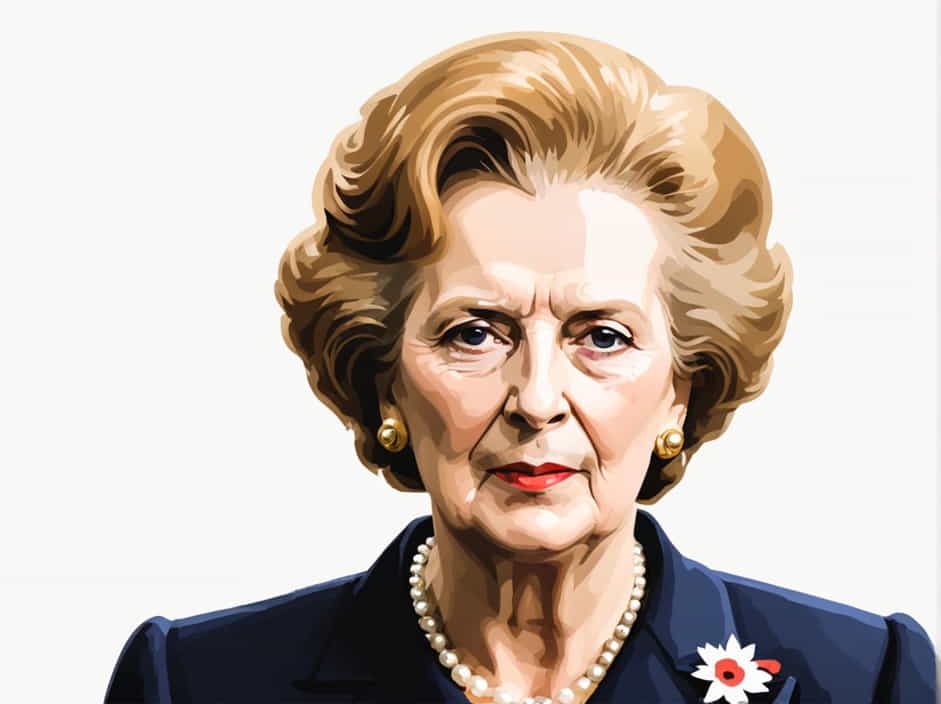
Margaret Thatcher, one of the most iconic and influential figures in British politics, served as Prime Minister of the United Kingdom from May 4, 1979, to November 28, 1990. Her tenure, spanning over 11 years, remains the longest continuous term for a British prime minister in the 20th century. Known as the "Iron Lady," Thatcher’s leadership style, policies, and impact on both domestic and international affairs have cemented her legacy in history.
Margaret Thatcher’s Early Life and Political Rise
Who Was Margaret Thatcher?
Margaret Thatcher, born Margaret Hilda Roberts on October 13, 1925, in Grantham, Lincolnshire, was the daughter of a grocer. Her upbringing emphasized hard work, self-reliance, and conservative values. She excelled academically, studying chemistry at Oxford University, where she became involved in student politics.
Entry Into Politics
Thatcher entered politics in the early 1950s, standing as a Conservative candidate. She was elected as the Member of Parliament (MP) for Finchley in 1959. Over the years, she climbed the political ladder, eventually becoming the leader of the Conservative Party in 1975, following Edward Heath.
When Did Margaret Thatcher Become Prime Minister?
Margaret Thatcher became Prime Minister on May 4, 1979, after leading the Conservative Party to a landslide victory in the general election. Her party defeated the Labour government led by James Callaghan, marking the beginning of an era often referred to as "Thatcherism."
What Was Thatcherism?
Thatcherism refers to the political ideology and policies promoted by Margaret Thatcher. These included:
-
Free Market Economics: A focus on privatization and reducing government control over industries.
-
Deregulation: Cutting red tape to encourage business growth.
-
Monetarism: Emphasizing control of the money supply to combat inflation.
-
Individual Responsibility: Promoting self-reliance and reducing dependency on the state.
Key Milestones During Margaret Thatcher’s Premiership
1. Economic Reforms
One of Thatcher’s most notable contributions was her economic reforms. When she took office, the UK was struggling with high inflation, unemployment, and a stagnant economy. Thatcher introduced policies to curb inflation, such as controlling public spending and privatizing state-owned enterprises like British Telecom, British Gas, and British Airways. These reforms were controversial but had a lasting impact on the UK economy.
2. The Falklands War (1982)
In 1982, Argentina invaded the Falkland Islands, a British overseas territory. Thatcher’s decisive leadership during the Falklands War showcased her resolve. The successful military campaign restored British control of the islands and boosted her popularity at home.
3. Confrontation with Trade Unions
Thatcher is remembered for her confrontations with trade unions, particularly the Miners’ Strike of 1984-1985. She believed that unions had too much power and were hindering economic progress. Her government passed laws to reduce union influence, which led to significant industrial changes.
4. International Relations
Thatcher maintained a close relationship with U.S. President Ronald Reagan, sharing a mutual commitment to free-market policies and opposition to the Soviet Union during the Cold War. Her strong stance against communism earned her respect internationally.
5. Poll Tax Controversy
One of the most controversial aspects of Thatcher’s tenure was the introduction of the Community Charge, commonly known as the poll tax. This flat-rate tax on individuals led to widespread protests and riots. The backlash against the poll tax contributed to her eventual resignation.
When Did Margaret Thatcher Leave Office?
Margaret Thatcher resigned as Prime Minister on November 28, 1990, after losing support within her own Conservative Party. Internal disagreements and growing public dissatisfaction with some of her policies, particularly the poll tax, led to her decision to step down. She was succeeded by John Major, who continued as Conservative leader and Prime Minister.
Legacy of Margaret Thatcher’s Premiership
Economic Legacy
Thatcher’s economic policies transformed the UK, moving it away from a state-controlled economy to a market-driven one. While her reforms led to economic growth, critics argue that they widened the gap between rich and poor.
Social Impact
Thatcher’s focus on individualism and self-reliance resonated with many but also drew criticism for reducing the social safety net. Her policies reshaped the UK’s social fabric, leaving a mixed legacy.
Political Influence
Margaret Thatcher was the first woman to serve as Prime Minister of the United Kingdom, breaking barriers for women in politics. Her leadership style and strong personality inspired admiration and opposition in equal measure.
Interesting Facts About Margaret Thatcher
-
First Female Prime Minister: Thatcher was the first and, so far, only woman to hold the office of Prime Minister in the UK.
-
Iron Lady: She earned the nickname "Iron Lady" due to her uncompromising leadership style and strong will.
-
Chemistry Background: Before entering politics, Thatcher worked as a research chemist.
-
The Thatcher Effect: Her policies inspired similar economic reforms in other countries, including the U.S. under Ronald Reagan.
Why Is Margaret Thatcher Still Relevant Today?
Margaret Thatcher’s time as Prime Minister continues to spark debate. Supporters praise her for revitalizing the UK economy and restoring national pride, while critics highlight the social inequalities that emerged during her tenure. Her leadership style and policies remain a reference point in political discussions, making her one of the most studied figures in modern British history.
Margaret Thatcher served as Prime Minister of the United Kingdom from 1979 to 1990, leaving an indelible mark on the nation and the world. Her tenure was characterized by bold economic reforms, decisive leadership during crises, and a firm belief in individual responsibility. While her legacy remains polarizing, there is no denying her significant impact on British politics and society. As history continues to evaluate her contributions, Margaret Thatcher’s time in office remains a defining chapter in the story of modern Britain.