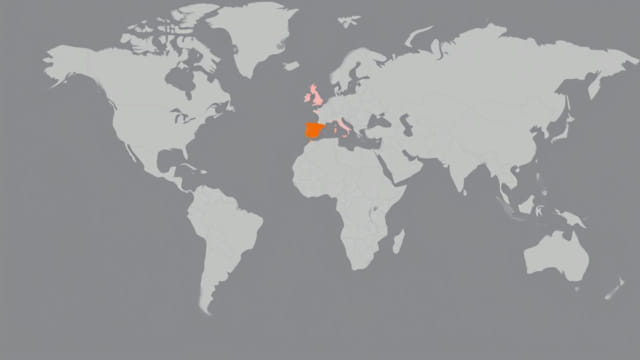
During the 1930s, the world experienced significant political upheaval, and many nations that had been experimenting with democratic governance began to shift toward authoritarian rule. This turbulent decade, shaped by the aftershocks of World War I and the Great Depression, saw democratic institutions crumble under the weight of economic despair, political extremism, and rising nationalism. Understanding which countries transitioned from democratic to undemocratic systems in the 1930s offers insight into how fragile democracy can be under stress and highlights the global climate that paved the way for World War II.
Backdrop of the 1930s: A Decade of Crisis
The interwar period was a volatile time. Many newly established democracies in Europe, especially those formed after the collapse of empires following World War I, struggled to maintain political stability. Economic hardship, such as hyperinflation, mass unemployment, and widespread poverty, weakened public trust in democratic governments. Extremist political parties on both the left and right capitalized on this discontent to gain power, often with promises to restore national pride or economic prosperity.
Factors Behind the Decline of Democracy
- Economic instability: The Great Depression devastated economies worldwide, undermining democratic governments seen as ineffective in responding to crisis.
- Nationalist sentiment: A growing desire for strong leadership led many to embrace authoritarianism as a solution to perceived national decline.
- Fear of communism: The Bolshevik Revolution in Russia scared many elites and middle-class citizens in Europe, prompting them to support fascist or militaristic regimes to avoid similar uprisings.
- Weak political institutions: Young democracies lacked robust checks and balances, making it easier for authoritarian leaders to seize control.
Germany: From Weimar Republic to Nazi Dictatorship
Germany is one of the most well-known examples of a country transitioning from democracy to dictatorship in the 1930s. After the fall of the German Empire, the Weimar Republic was established as a democratic government. However, economic turmoil, resentment over the Treaty of Versailles, and hyperinflation created fertile ground for radical ideologies. In 1933, Adolf Hitler was appointed Chancellor and soon consolidated power through the Enabling Act, transforming Germany into a Nazi dictatorship. Political parties were banned, opponents were imprisoned, and civil liberties were destroyed.
Italy: Democratic Foundations Dismantled by Fascism
Although Benito Mussolini became Prime Minister in 1922, Italy continued to maintain some democratic structures until the early 1930s. During this period, Mussolini steadily eroded democratic institutions, banned opposition parties, and created a fascist one-party state. By the early 1930s, all pretense of democracy had vanished. Italy became a fully authoritarian regime, emphasizing nationalism, militarism, and strict control over civil life.
Spain: A Republic Undone by Civil War
Spain proclaimed the Second Spanish Republic in 1931, marking a brief period of democratic governance. However, deep ideological divides between conservatives, monarchists, socialists, and anarchists led to political chaos. In 1936, a military coup led by General Francisco Franco ignited the Spanish Civil War. By 1939, Franco had emerged victorious, and Spain became an authoritarian dictatorship that lasted until the 1970s. The failure of the Republic underscored how fragile democracy could be amid social and political polarization.
Austria: Authoritarianism Under Engelbert Dollfuss
Austria experienced significant instability following the dissolution of the Austro-Hungarian Empire. The First Austrian Republic, founded in 1919, was democratic in form but marred by political violence and economic distress. In 1933, Chancellor Engelbert Dollfuss used parliamentary procedures to suspend the Austrian legislature and rule by decree. He established the Austrofascist regime, which suppressed opposition and banned the Communist and Nazi parties. By the mid-1930s, Austria was firmly under authoritarian control, setting the stage for the 1938 Anschluss with Nazi Germany.
Portugal: From Democratic Experiment to Estado Novo
Portugal underwent a brief democratic period following the revolution that overthrew the monarchy in 1910. However, the First Portuguese Republic was unstable and riddled with coup attempts. In 1926, a military coup ended democracy, and by 1933, António de Oliveira Salazar had established the Estado Novo, a corporatist authoritarian regime. Although Portugal’s transition to dictatorship began in the 1920s, it solidified in the 1930s with the formal end of democratic governance.
Hungary: From Regency to Authoritarian Rule
Following World War I and the collapse of the Austro-Hungarian Empire, Hungary briefly experimented with democracy. However, after the fall of the short-lived Hungarian Soviet Republic in 1919, Admiral Miklós Horthy established a regency that functioned more like a military dictatorship. In the 1930s, Hungary aligned itself with fascist Italy and Nazi Germany, adopting increasingly authoritarian laws and policies. Political opposition was suppressed, and anti-Semitic laws were introduced, signaling Hungary’s firm departure from democratic norms.
Other Countries with Democratic Decline in the 1930s
Romania
Romania experienced growing authoritarianism in the 1930s. King Carol II dissolved parliament and established a royal dictatorship in 1938, outlawing political parties and increasing control over media and civil society.
Yugoslavia
Though a constitutional monarchy, Yugoslavia was unstable due to ethnic divisions. In 1929, King Alexander I declared a royal dictatorship, which persisted through the 1930s. Democratic processes were limited or suspended.
Poland
After regaining independence in 1918, Poland initially developed democratic institutions. However, the 1926 May Coup led by Józef Piłsudski resulted in a regime known as the Sanation government. Though not fully fascist, it curtailed democratic freedoms and heavily centralized power.
Patterns of Democratic Collapse
Several patterns emerged in the 1930s among countries that transitioned from democracy to authoritarianism:
- Economic collapse often preceded political collapse.
- Strong leaders promised order and national revival in the face of chaos.
- Fear of communism drove many to accept authoritarian rule as a lesser evil.
- Young democracies without strong institutions were especially vulnerable.
Lessons from the 1930s
The 1930s was a decade marked by the decline of democracy in many parts of Europe. Germany, Italy, Spain, Austria, Portugal, and others turned toward authoritarian rule due to internal instability, external pressures, and a global crisis of confidence in liberal governance. These transitions were not inevitable but resulted from specific social, economic, and political failures. Studying the fall of democracies in the 1930s reminds us that democracy must be actively defended and supported, especially in times of hardship. The warning signs of democratic backsliding remain relevant even today.